
A Pilot’s Perspective: Flying West with a Load of Masked Bobwhite Quail
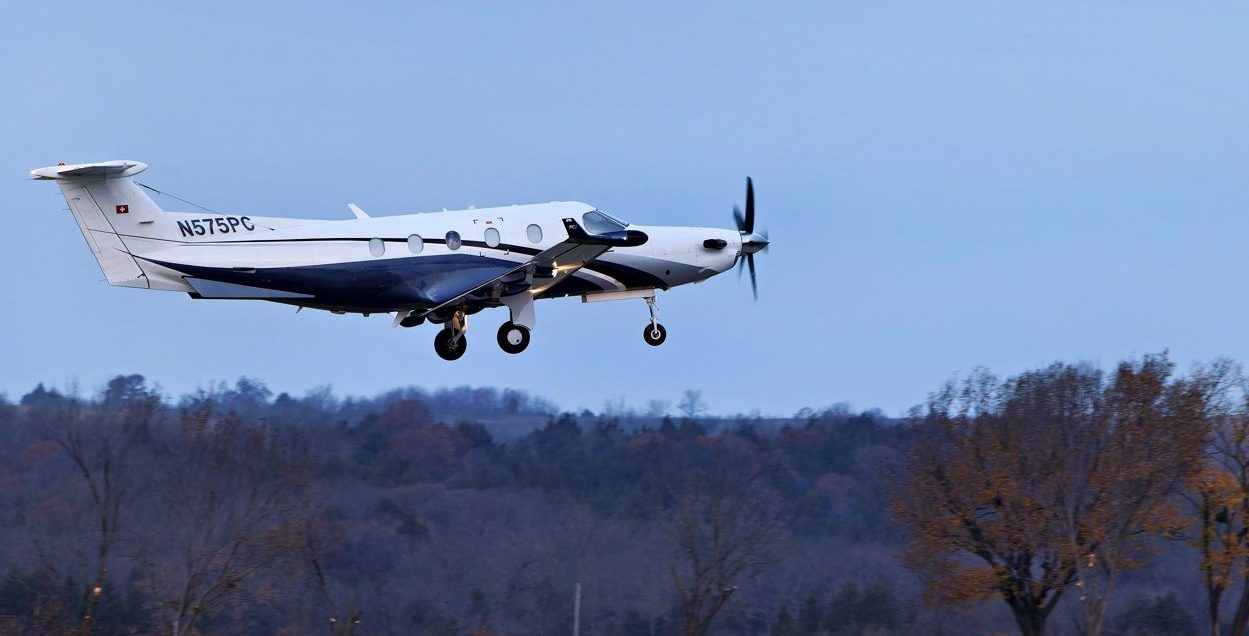
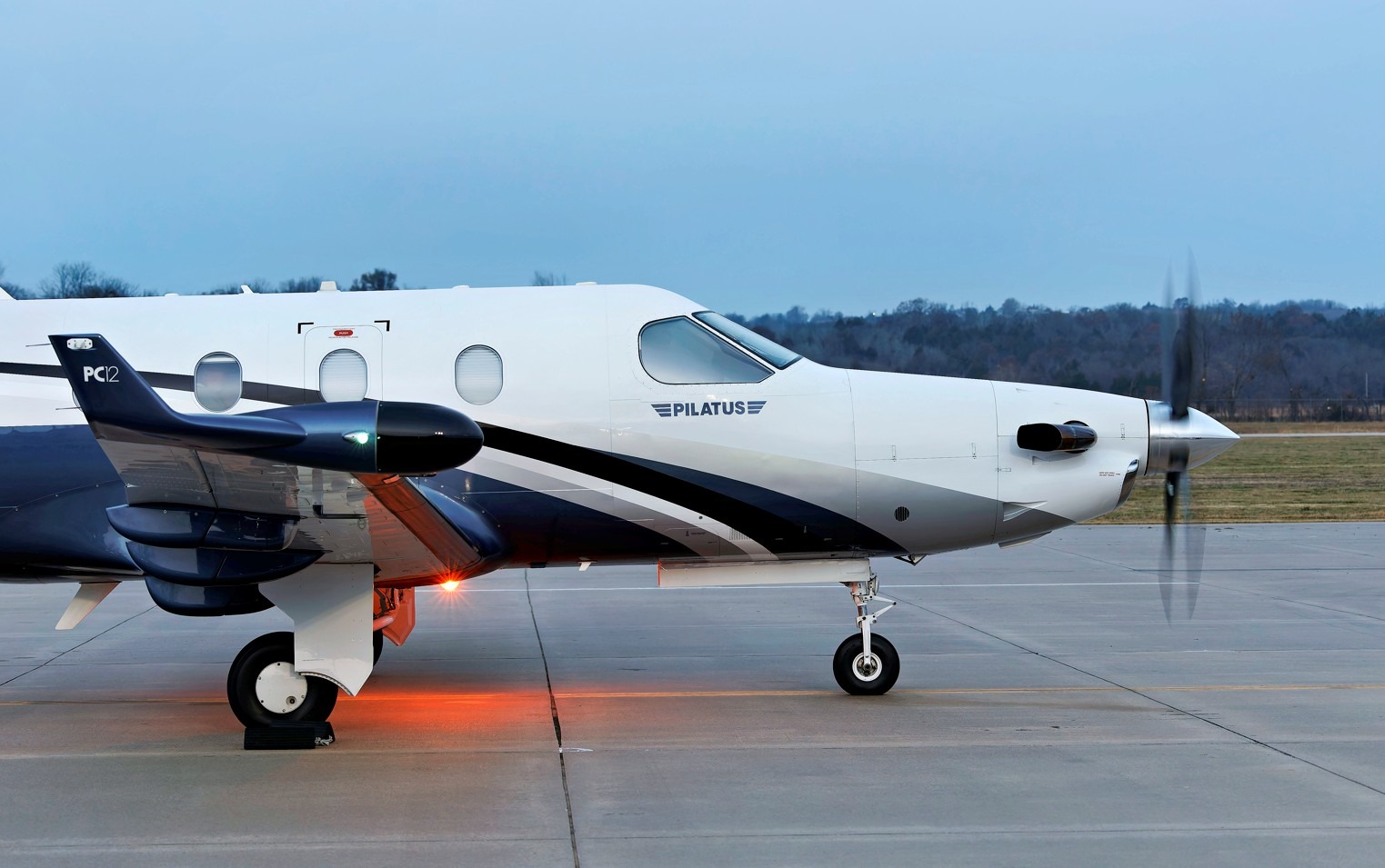
Jack Long takes off with a load of masked bobwhite quail headed for their new homes in Arizona. Photo by Don Wolfe.
When first described by scientists, the masked bobwhite quail thrived across the Southwestern United States and into Central Mexico. By the turn of the century, however, the population began to decline. And by the late 1940s, the birds were believed to be extinct.
That changed in 1964, when an Arizona taxidermist followed reports of quail sightings in Sonora, Mexico. The rumors proved true. A small number of birds were captured and released in the U.S., launching efforts to restore this subspecies of Northern Bobwhite Quail.
Today, LightHawk partners with the George Miksch Sutton Avian Research Center to continue that restoration work in the Southwest.
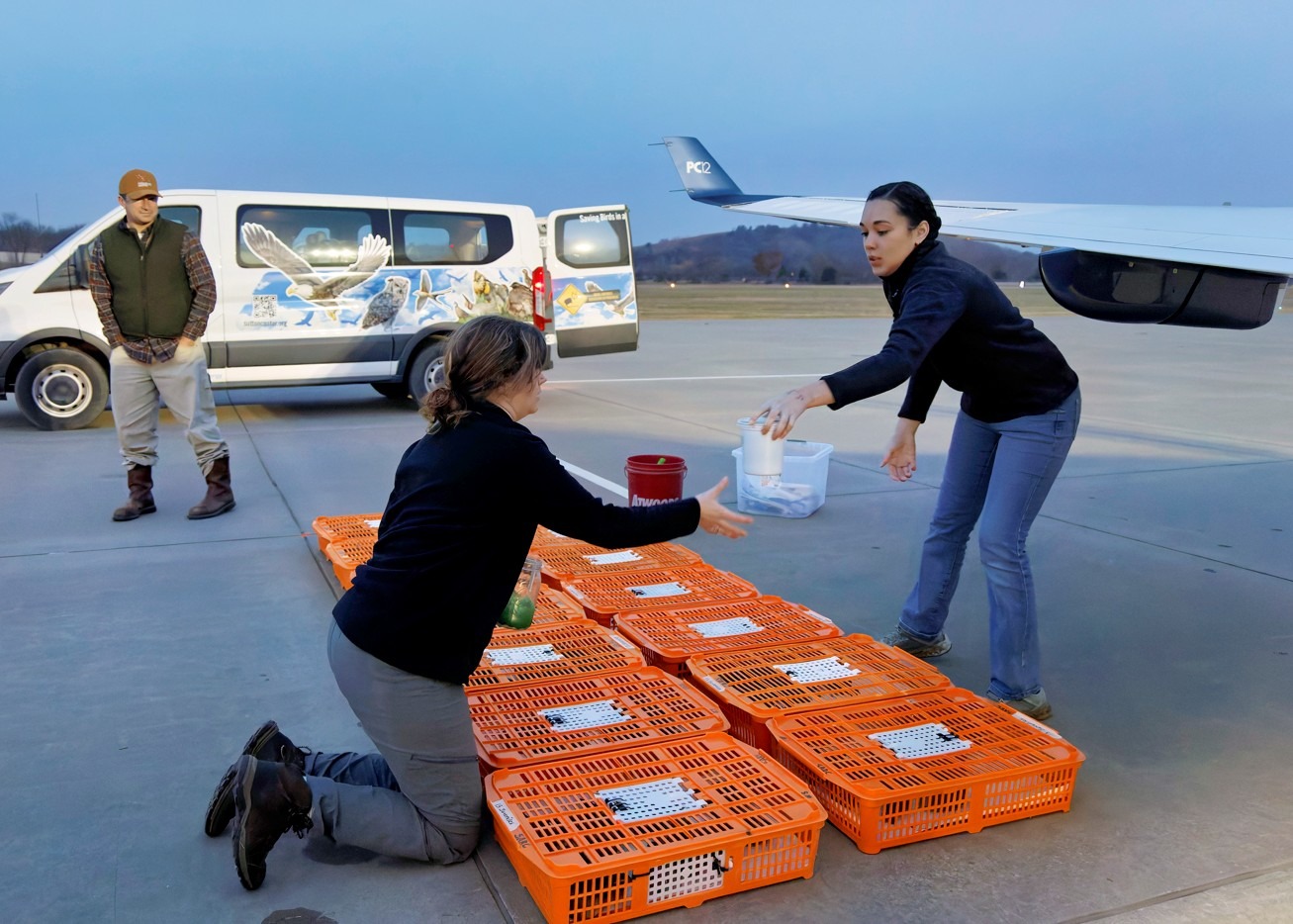
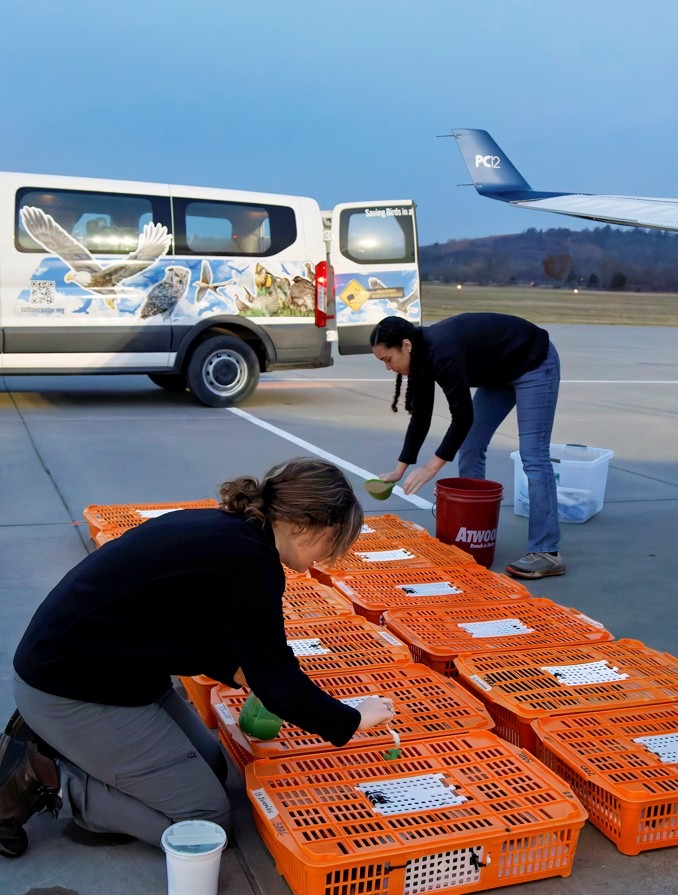
Workers from the Sutton Center work to prepare the crates of juvenile masked bobwhite quail for their trip to Arizona. Photo by Don Wolfe.
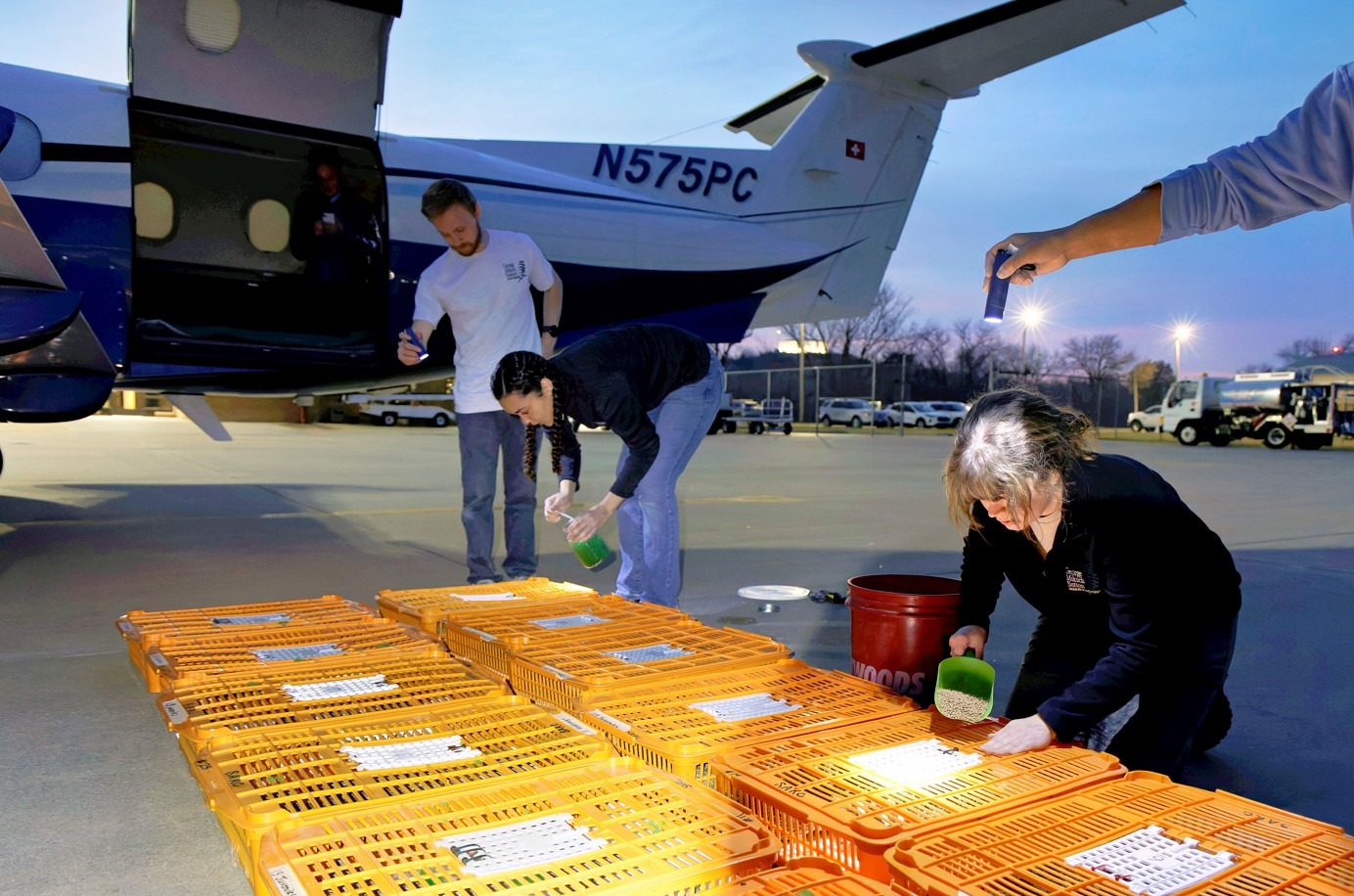
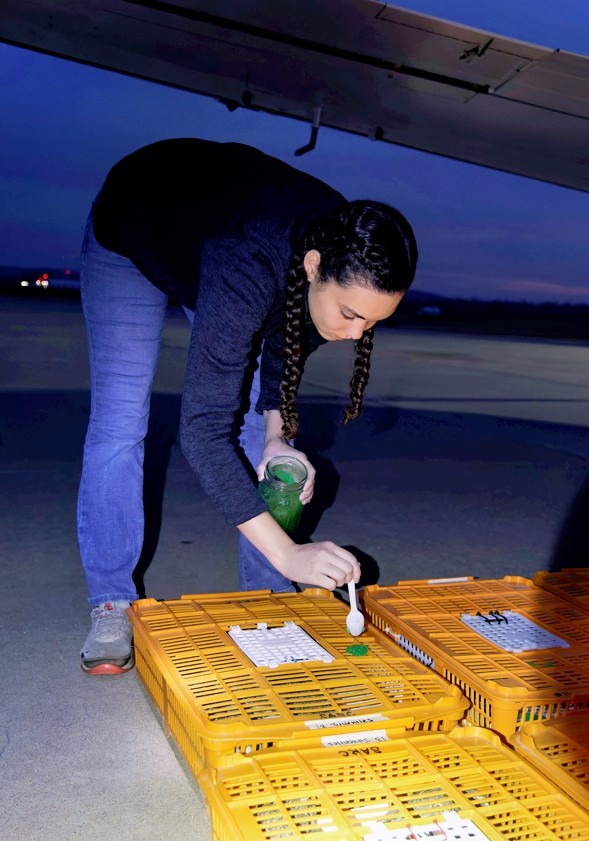
A nutrient gel is added to each crate before they are loaded onto the plane, providing food for the chicks during the trip. Photo by Don Wolfe.
Recently, LightHawk volunteer pilot Jack Long flew to Oklahoma to pick up 24 crates of juvenile masked bobwhite quail — nearly 300 birds — for transport to Arizona. To accommodate the Sutton Center’s requested sunrise departure, Jack arrived the night before and shared dinner with members of the Center’s team.
The next morning brought an unexpected challenge: the airport was without electricity, leaving no runway lights. Fortunately, the planned sunrise departure meant the flight could proceed safely.
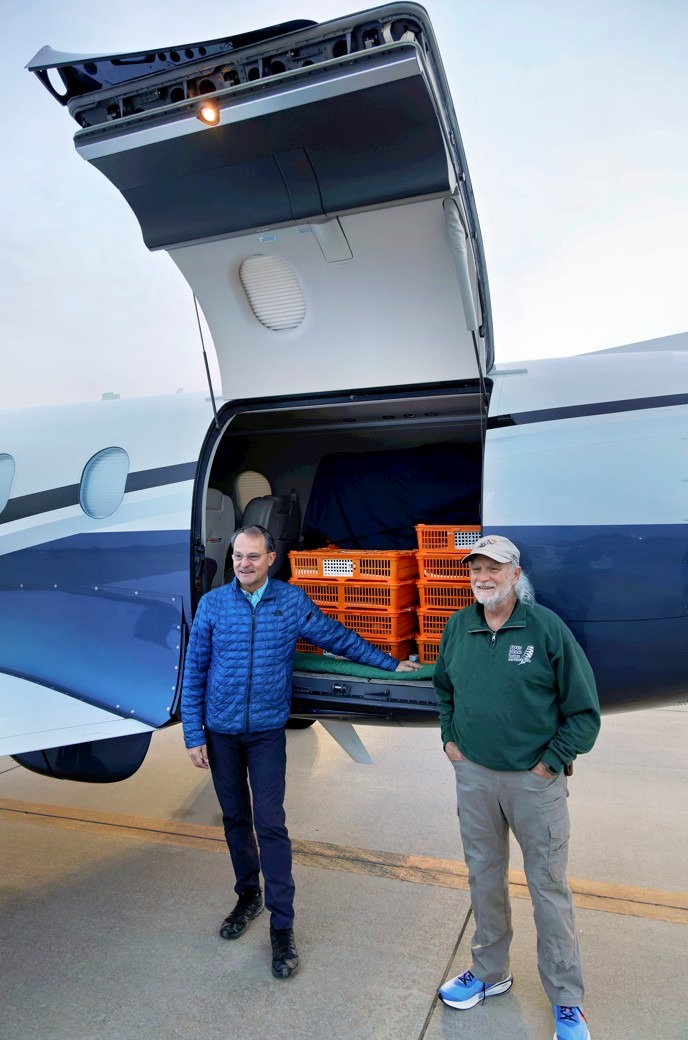
After carefully logging and loading the crates, the Sutton Center team ensured the quail had food for the journey. The precious cargo was secured in Jack’s Pilatus PC-12 after two rear seats were removed to create the needed space. With everything strapped down, it was time to depart.
Taking off in the early morning light, Jack climbed to flight level 200 for a smooth westbound flight. Thanks to his headset and the separation between cockpit and cargo, the birds remained quiet throughout the journey.
He flew into Tucson International to be met by US Fish and Wildlife team members to pick up the quail to take them to the release site. Jack chose TUS over a smaller, slightly closer airport used in the past due to fuel costs. Needing to refuel before flying home, the price of fuel was far less at TUS, saving him a substantial amount.

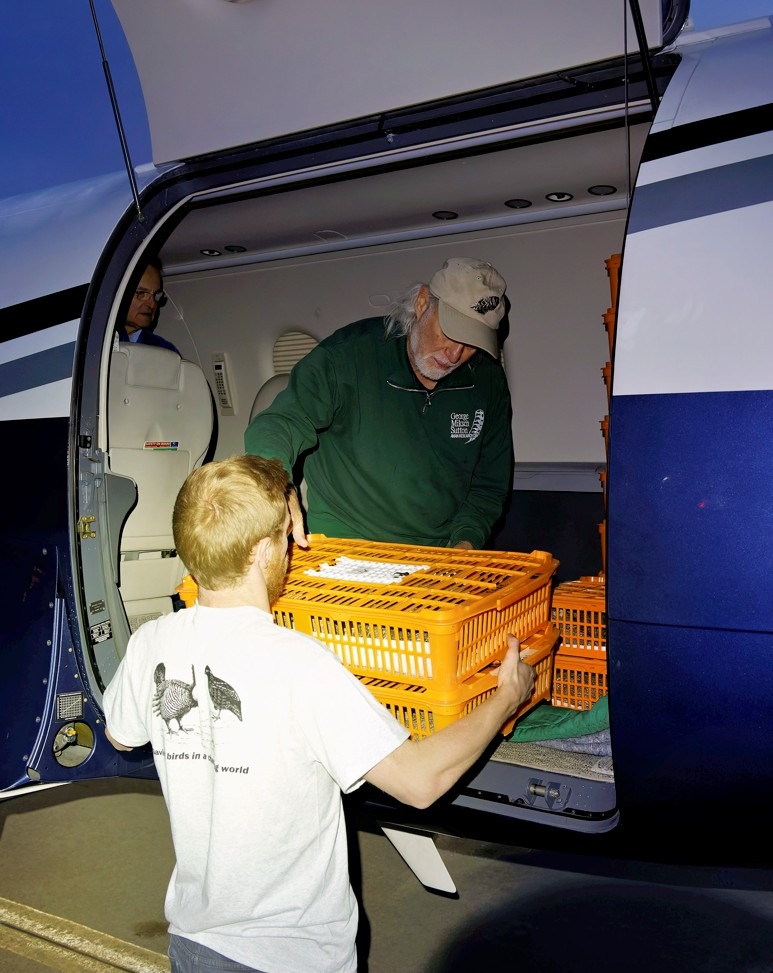
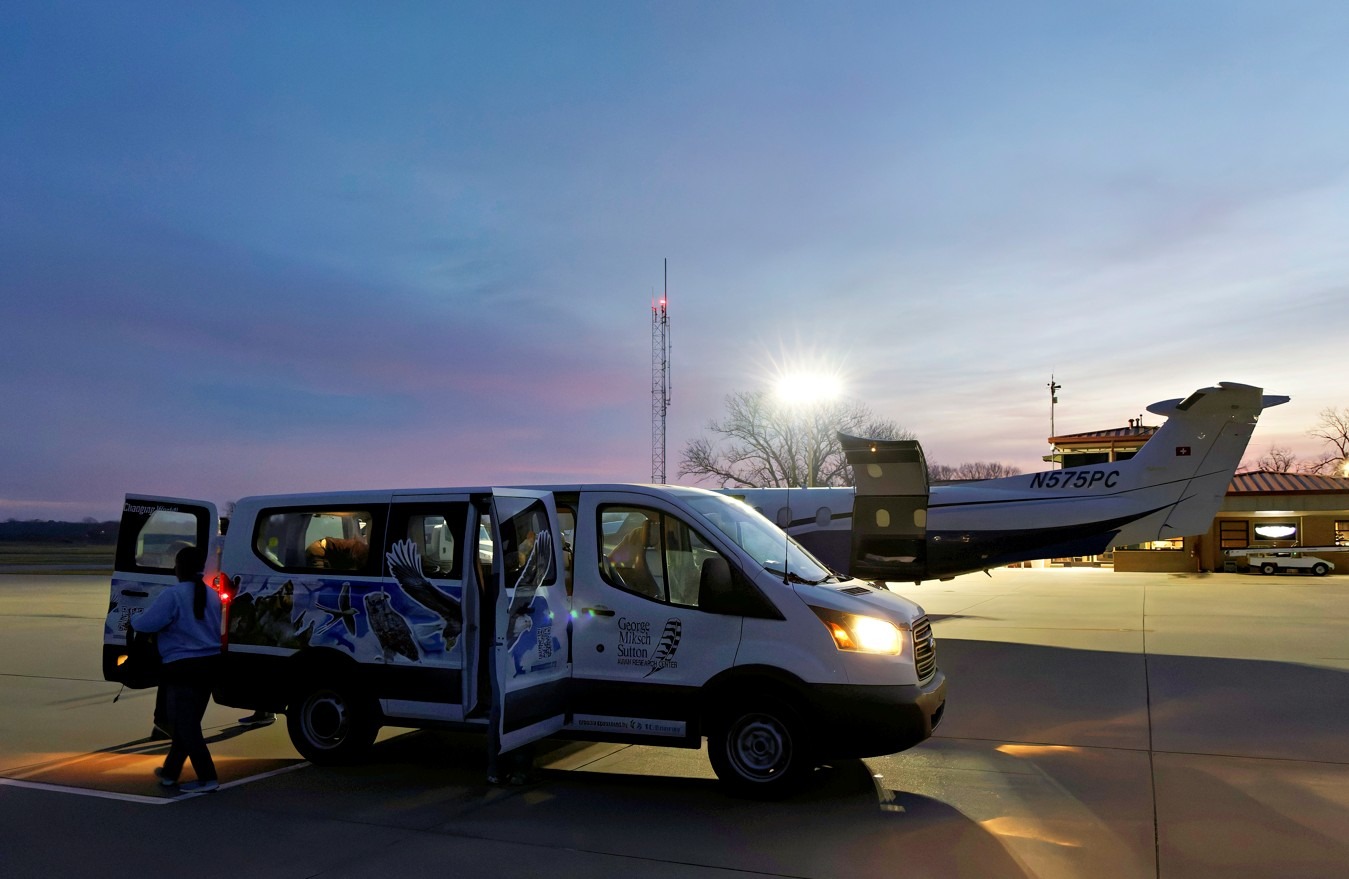
As workers complete logging the crates and adding food, the loading of Jack Long’s Pilatus PC-12 begins. Photo by Done Wolfe.
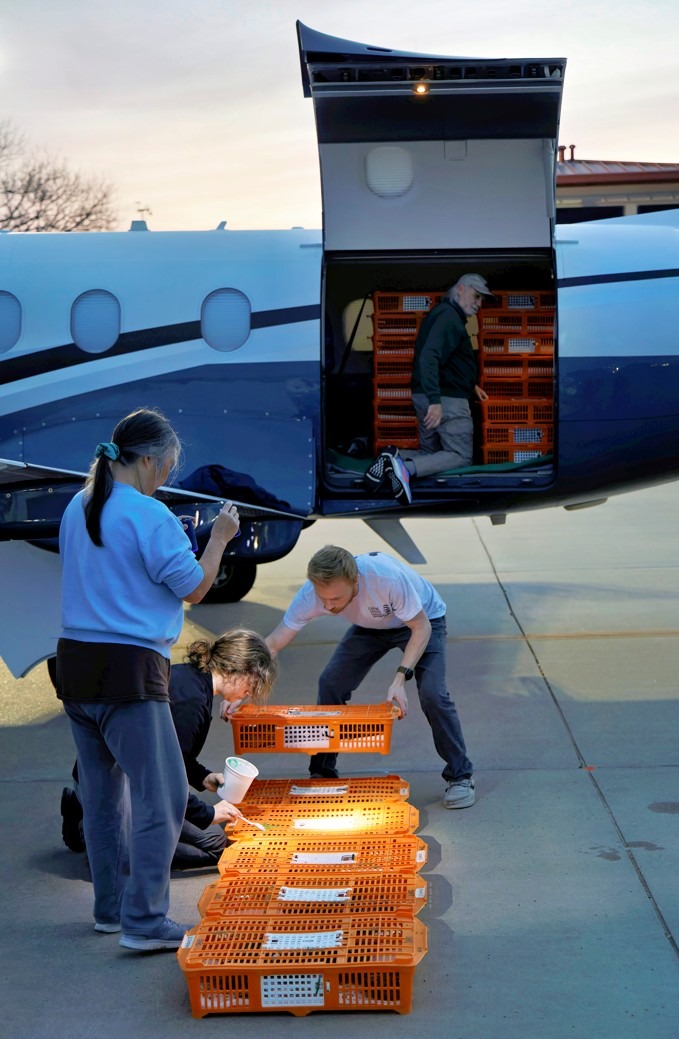
Team members load the crates full of juvenile masked bobwhite quail into the PC-12. Photo by Don Wolfe.
Jack landed at Tucson International Airport, where U.S. Fish and Wildlife Service team members met him to transport the quail to their release site. He chose TUS over a smaller nearby airport to take advantage of lower fuel costs, helping reduce the overall cost of the mission through a negotiated rate with the Corporate Aircraft Association.
Jack learned firsthand just how significant the impact of flights like this can be. Without air transport, Sutton Center staff would need to drive the birds long distances, often losing 10–20% during transport. With LightHawk flights, losses are rare, meaning far more birds reach the wild.
As Sutton Center team member Don Wolfe shared:
“Moving this number of birds via motor vehicle would have required two trips and over 20 hours to drive the 1,200 miles. By flying with LightHawk volunteer pilot Jack Long, we were able to transport the birds together in a four-hour flight.”
Thanks to Jack’s dedication and continued collaboration with the George Miksch Sutton Avian Research Center, the wild population of masked bobwhite quail in Arizona gained several hundred new members, advancing the long-term effort to restore this remarkable species.
Photos by Don Wolfe.