
Providing the Aerial Perspective on Tribe’s California Condor Reintroduction
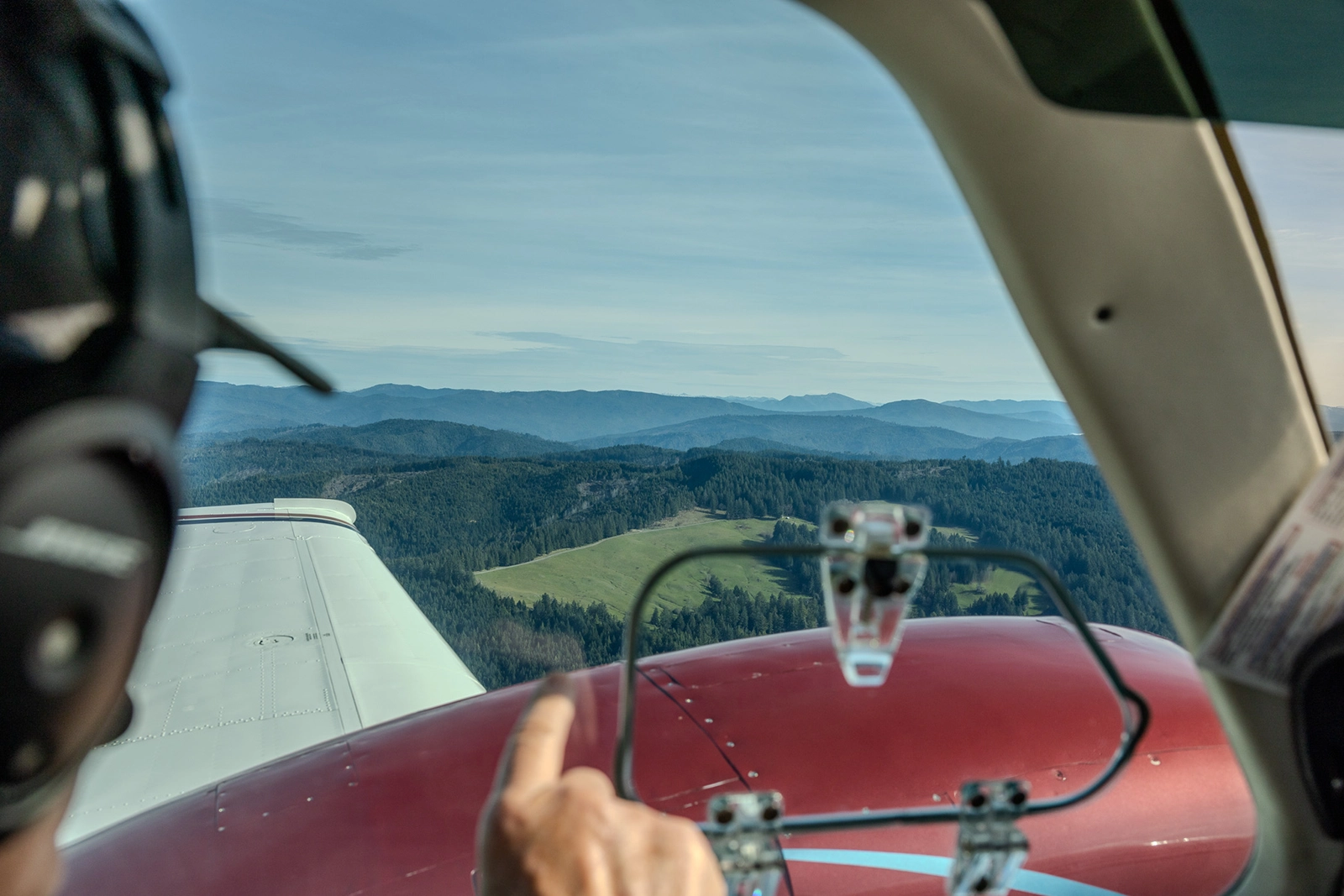
Rick Utermoehlen points out an area of interest during the flight with Natives Outdoors to capture the aerial perspective of California condor habitat as part of a documentary project on the Yurok Tribe’s efforts to reintroduce the species to their ancestral lands. Photo by Len Necefer.
The reintroduction of California condors to parts of Northern California is an interesting story. It’s one that deserves to be told but would not be complete without seeing the land as a condor sees it – from the air.
The Yurok Tribe (a LightHawk conservation partner) is one of many indigenous cultures that view the condor as sacred. According to the tribe, the birds are “spiritually tried to the Yurok Hlkelonah – the cultural and ecological landscape – since the beginning of the world.” Not only are condors important for biological diversity, they have cultural importance as well.
To better tell the story of their reintroduction and the work tribal communities are doing to restore the population, we partnered with Natives Outdoors to fly above the landscapes condors call home. Volunteer pilot Rick Utermoehlen brought his Beechcraft Baron to the mission, providing a little over an hour of flight time for the crew to collect imagery.
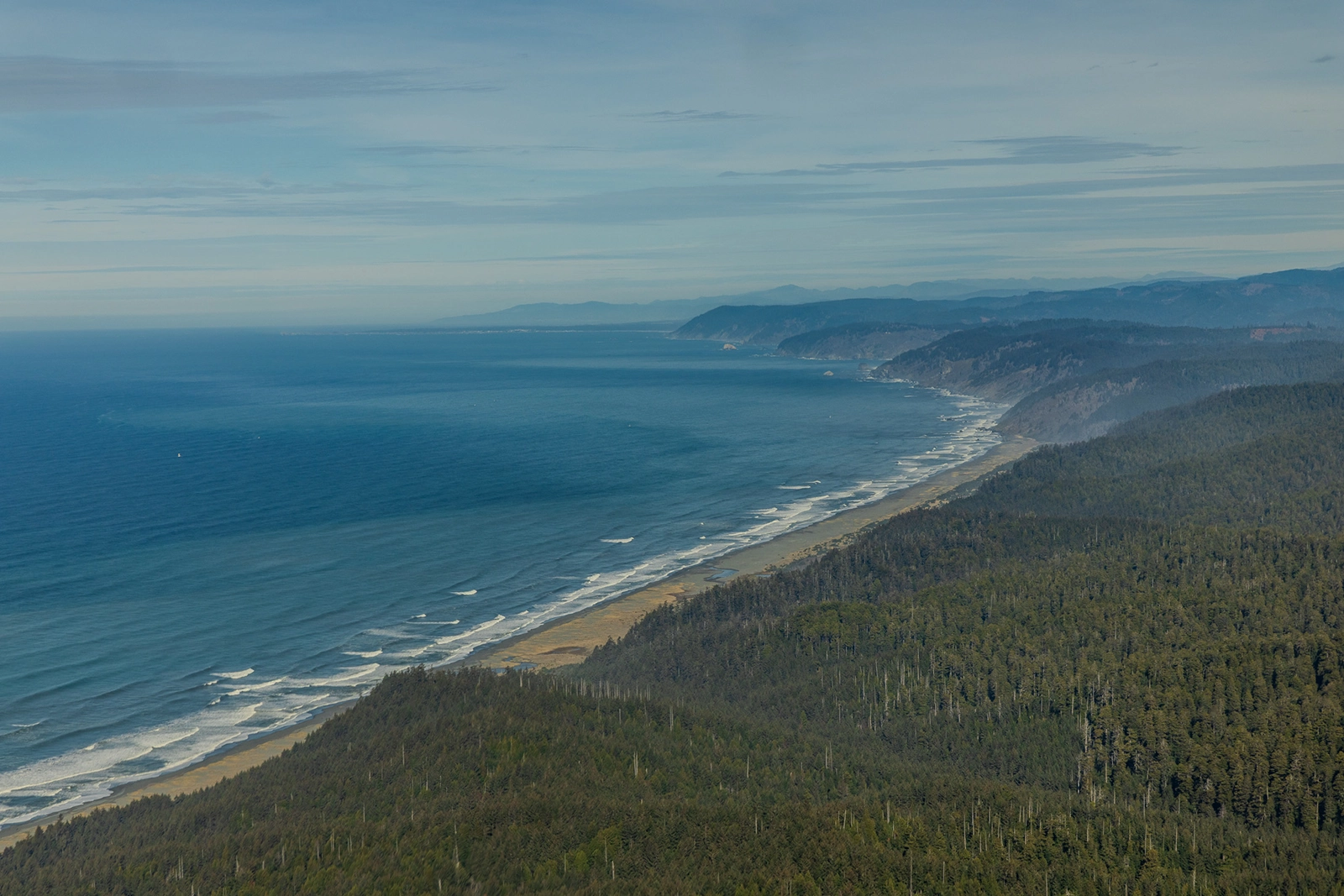
The initial flight route took the group up the coast of Northern California over red wood forests before turning east at the Klamath River. Photo by Len Necefer.
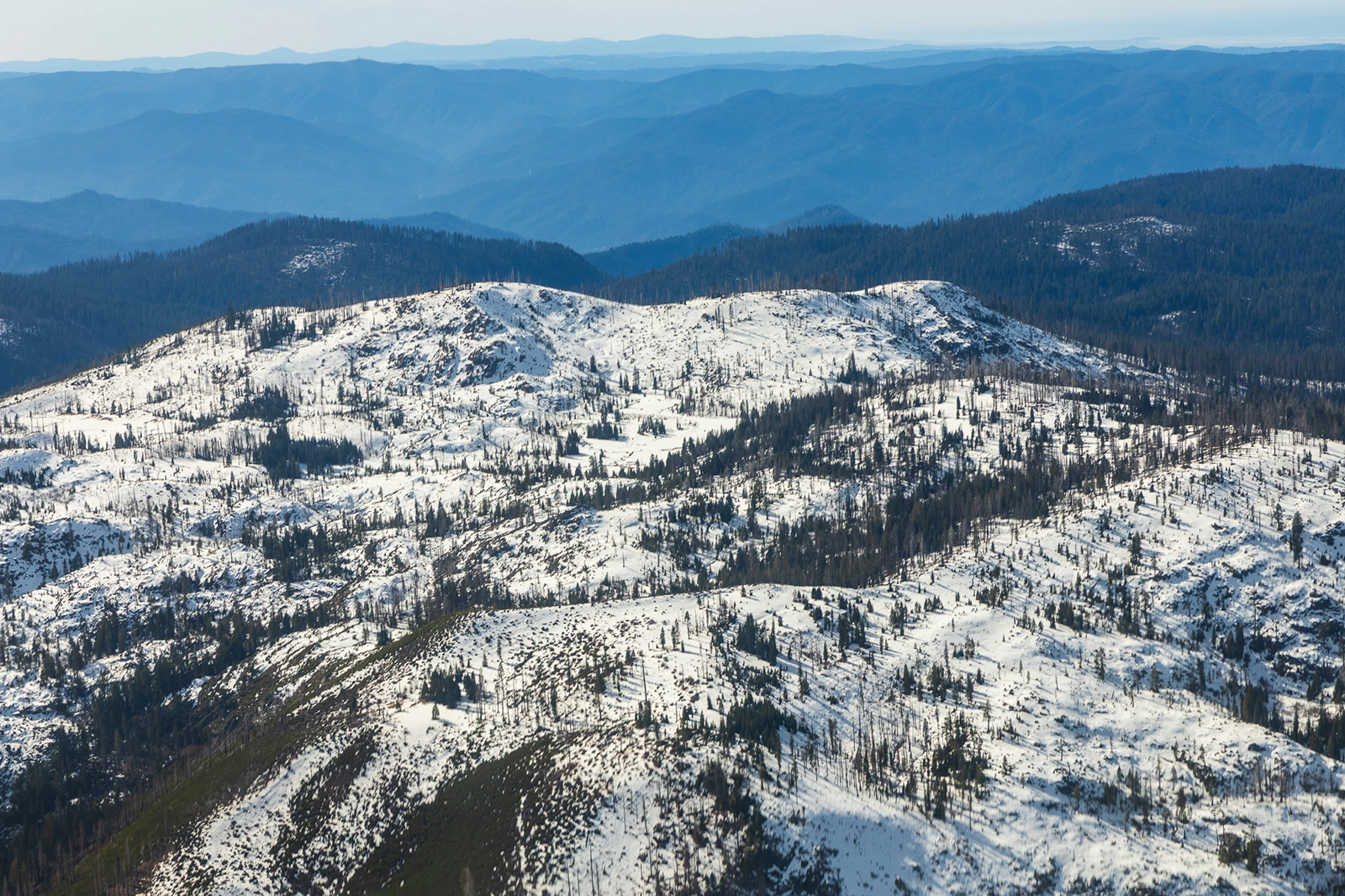
Snow covered portions of the landscape that California condors call home. Photo by Len Necefer.
Rick said he signed up for the flight because, “It sounded like a great mission.” He had previously had a great experience flying members of the Nez Perce tribe, including getting pinned by the tribal chief.
Ahead of the mission, Rick spent a good deal of time on preflight planning. He went over the route several times on his computer and various flight planning tools. He commented that he appreciated how good LightHawk is about sending the routes out ahead of time so he could prepare.
He was initially concerned that weather would be a factor given it was late January, early February for the flight. Fortunately, it was a beautiful day with no clouds, calm winds and minimal turbulence according to Rick.
About the flight, Rick shared, “The flight started in Arcata, right on the coast of the Pacific Ocean. Then we just headed up north along the coast, along the red wood forest National Park and then right past the Klamath River and just kept following it until it intersected with the Trinity River which is another marvelous river. Then flew up into the Trinity Alps – some of the peaks are 11k feet.. It’s serious flying up there.”
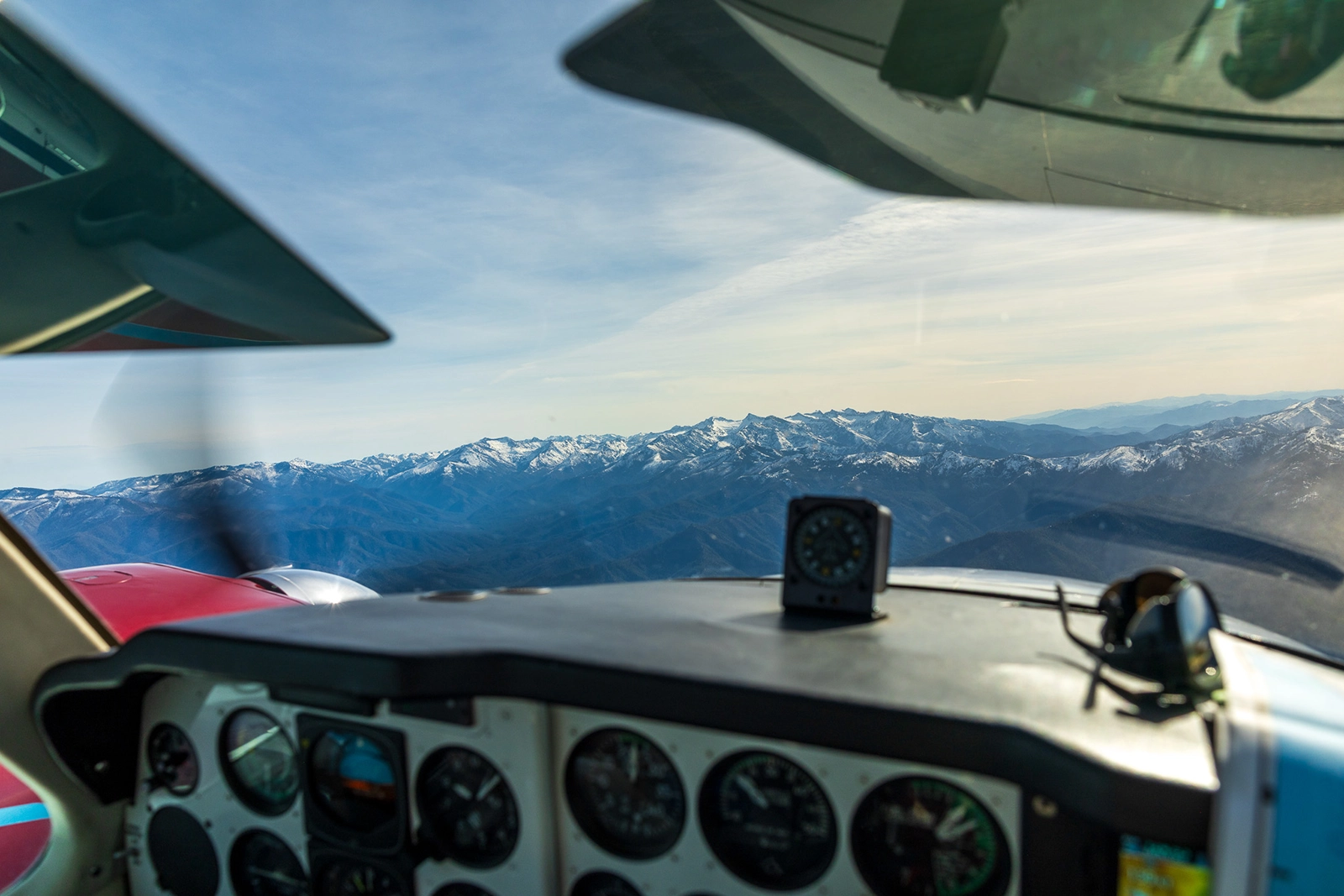
Rick’s Beechcraft Baron served as a great photo platform for Natives Outdoors. Flying around 1,000 feet above the ground, the crew was able to capture great imagery. Photo by Len Necefer.
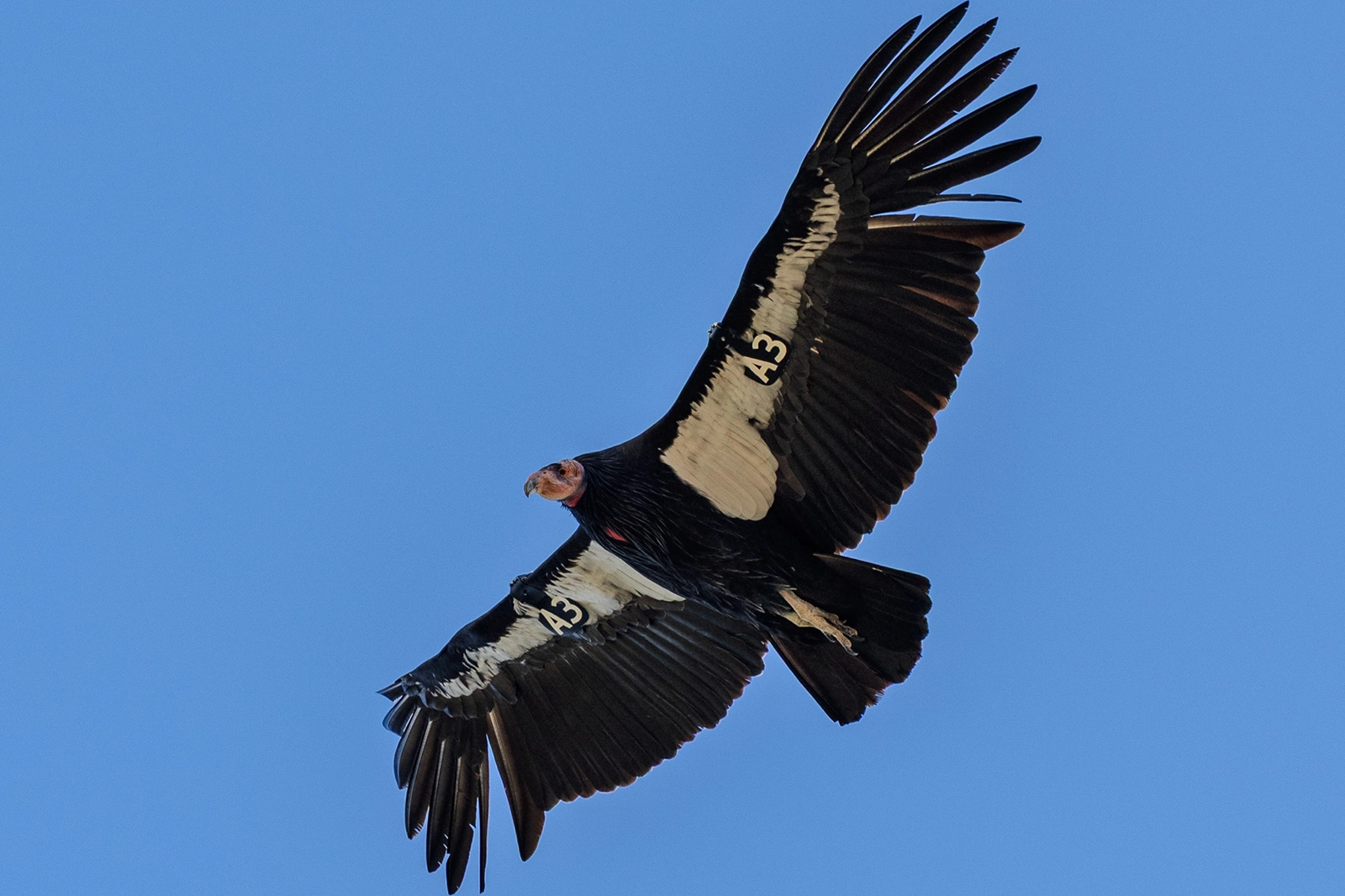
The Yurok Tribe is one of several that consider the California condor sacred. For several years they have worked with other agencies to reintroduce the birds to their lands. Photo by Len Necefer.
Along the way they captured imagery of the lands, including a condor facility that raises young birds before they head out into the wild. Rick said, “We flew over the condor kind of farm where they kind of start and often fly back to for feeding. I circled it and my wing was pointed right at the ground.”
With one passenger up front with Rick and one in the back, he felt it was an ideal setup for the camera person in back. They were able to move to either side of the plane to capture footage and Rick would bank the plane as necessary to get clear shots. Having the extra room was especially handy, Rick commented, “the photographer had 70 pounds of camera gear, it’s serious stuff! A lot of airplanes wouldn’t even be able to carry it plus two big guys!”
He went on to say, “I think everybody was pretty happy with the result. I’ve spoken to Len a time or two and he forwarded some pictures. It was a great day to fly. I enjoyed the flying and what it had to take to fly in and out of the valley and over the rivers and put him in a position to take high quality photos.”
Though they didn’t see much in the way of condors during the flight, the partners were pleased with the flight and were happy with the imagery they were able to collect. They shared with Rick that condors usually fly in the afternoons so to capture images of them flying from above would require flying later in the day. Rick shared that he would be interested in a flight to do just that!
Rick Utermoehlen started his flying career 56 years ago when he joined the Naval Aviation program. He began his flight training in 1968 where he earned his wings. He then served as a Naval flight instructor for a few years
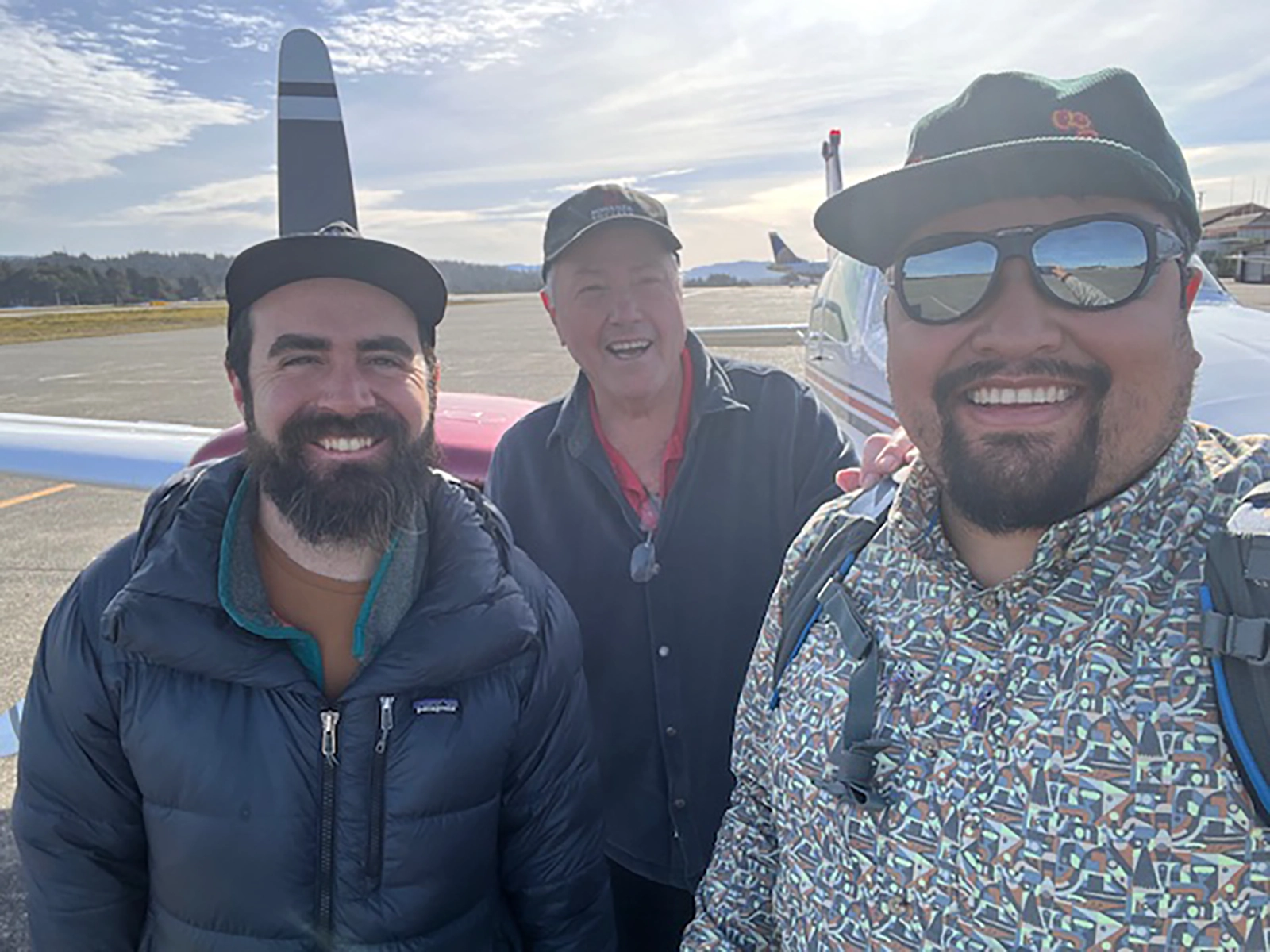
The Nativs Outdoors crew was appreciative of Rick and the flight he provided. It allowed them to accomplish their goals in gathering imagery for their film project. Photo by Len Necefer.
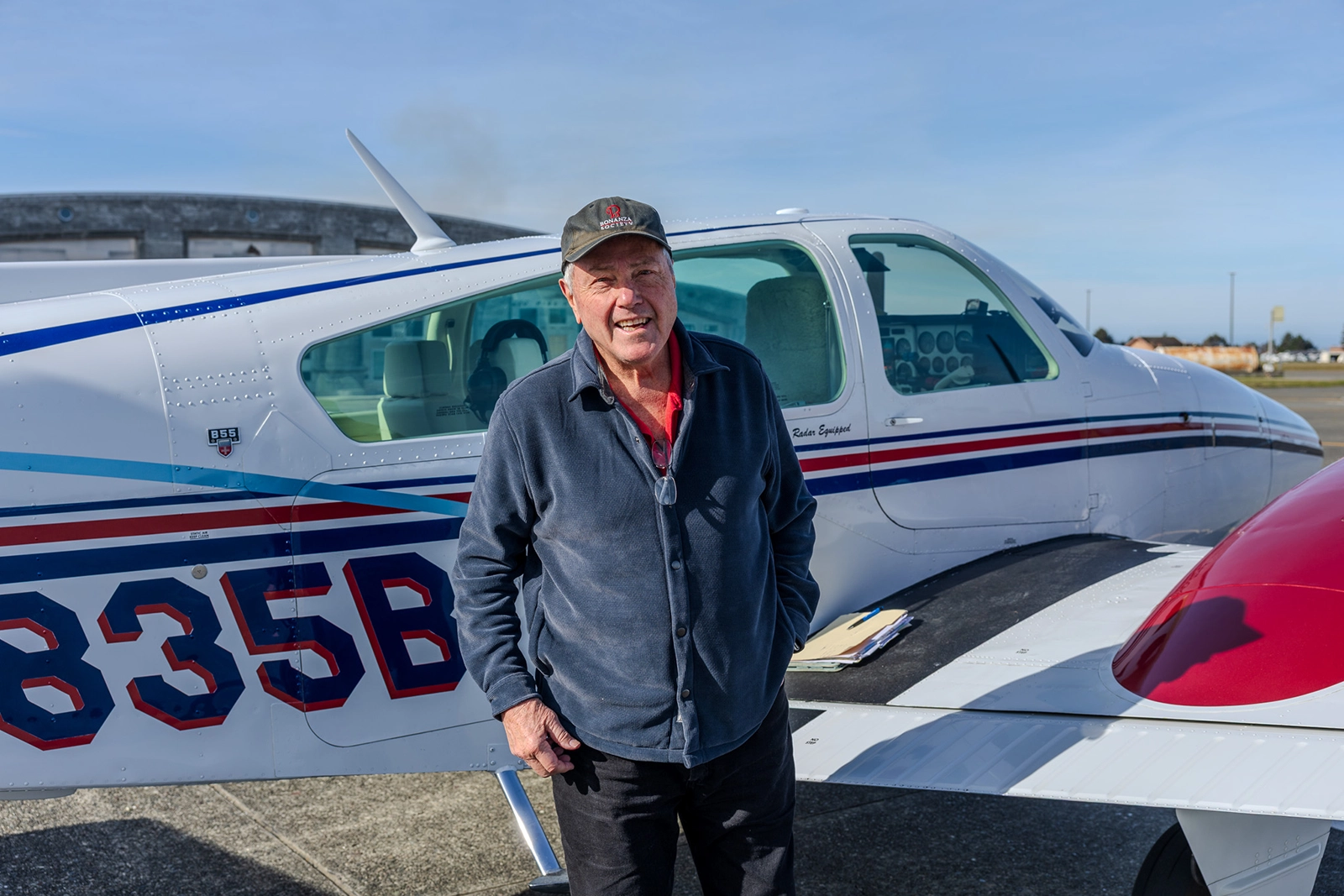
Rick Utermoehlen standing next to his Beecraft Baron. He has been flying for 56 years and enjoys his flights with LightHawk because they give him a good reason to fly. Photo by Len Necefer.