
An Aerial Perspective on a Proposed Data Center in Montana
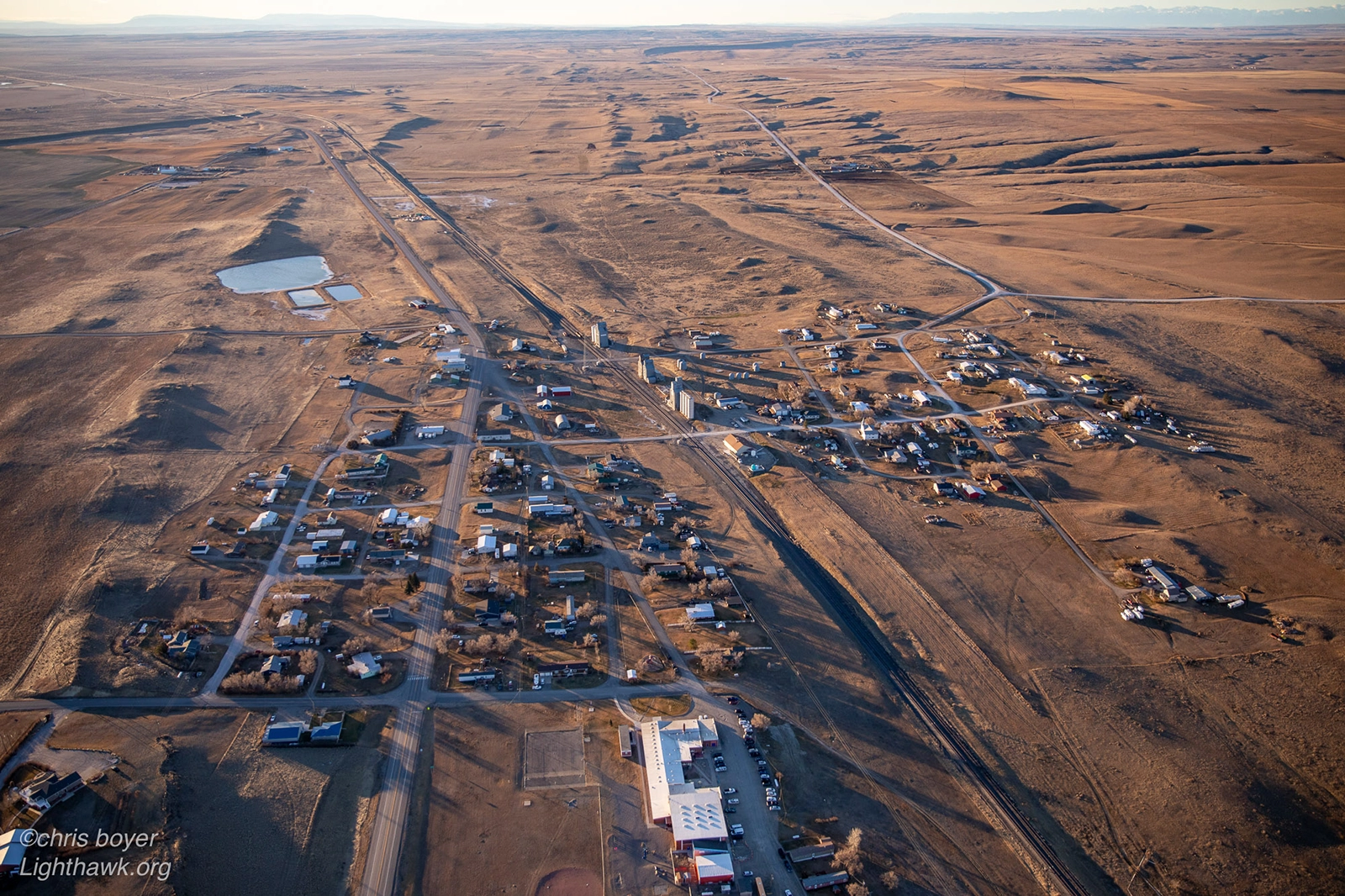
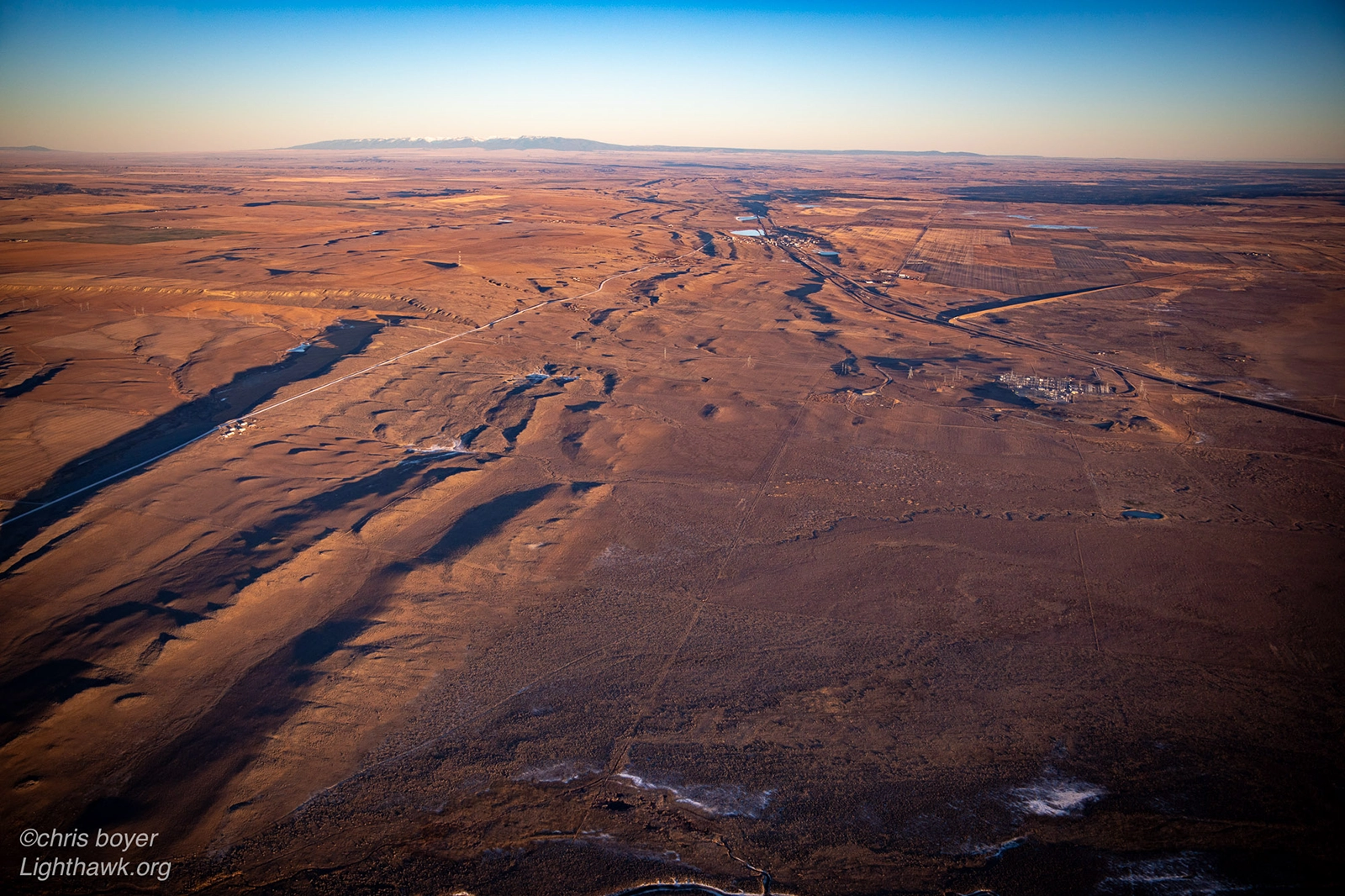
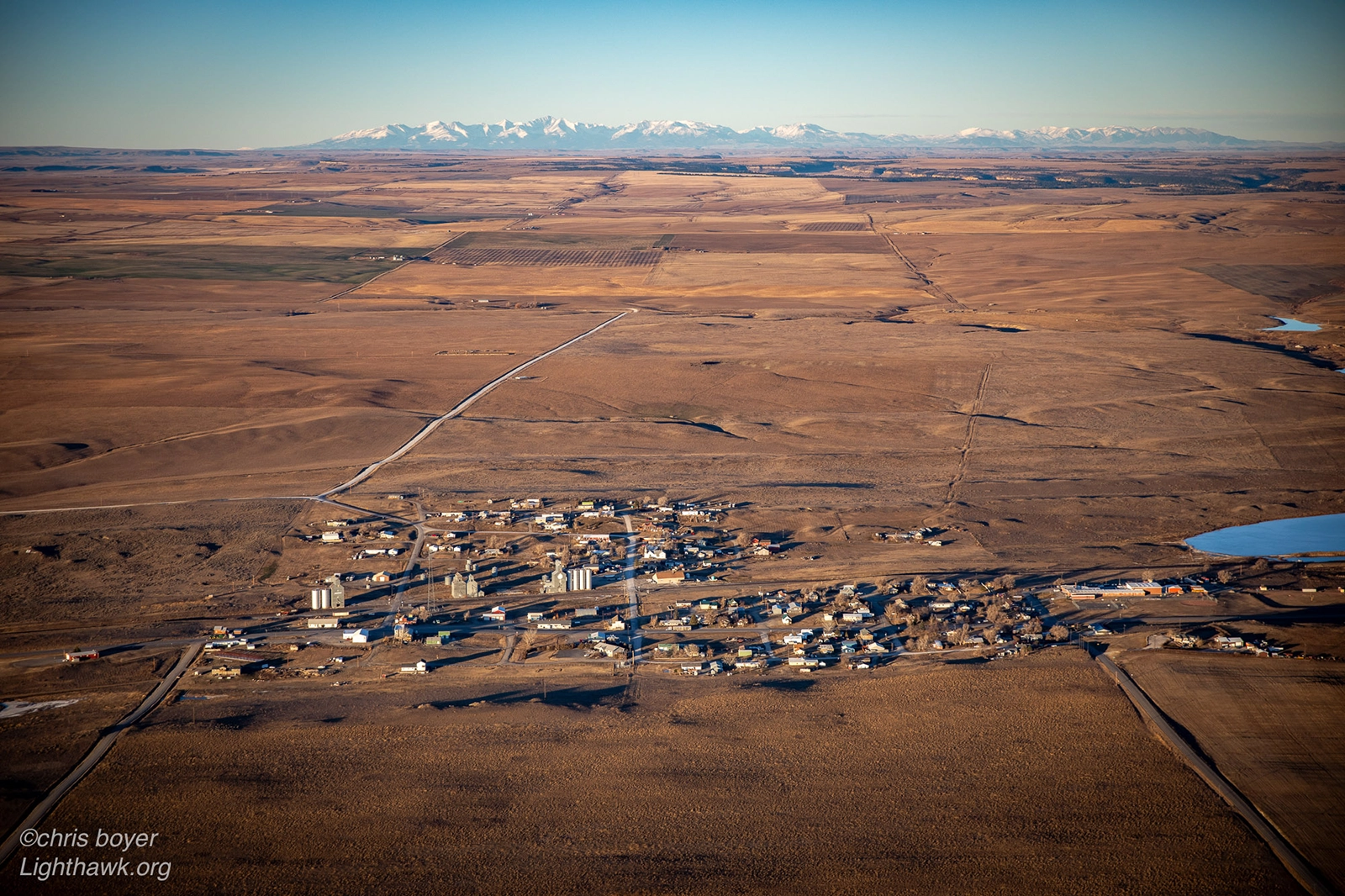
The town or Broadview, Montana is home to fewer than 150 people. It is also the site of a proposed 5,000 acre date center to serve AI, internet searches and streaming services. The data center’s impact on the environment has some in the state concerned. Photo by Chris Boyer.
When LightHawk volunteer pilot and staff member Chris Boyer took off earlier this month, his destination was a small agricultural town in central Montana. Broadview is home to about 150 people – farmers mostly. Their small town is attracting a lot of attention these days. A proposed 5,000-acre AI data center has raised concerns among local residents and conservation experts at our partner organization, Montana Environmental Information Center (MEIC), about its potential impact to the area.
Data centers are warehouse–sized facilities filled with thousands of computers. They provide the computational muscle behind AI, internet searches and streaming services, butthey also require substantial resources. Powering the servers inside a data center uses immense amounts of electricity – often generated by fossil fuels in Montana. Data centers also are major users of water to cool the servers and can consume as much as five million gallons a day.
Broadview already lives with drought. Over the past two decades, with the community has faced ongoing water issues that impact agricultural operations. The proposeddata center and its immense water usage raise red flags for the community.
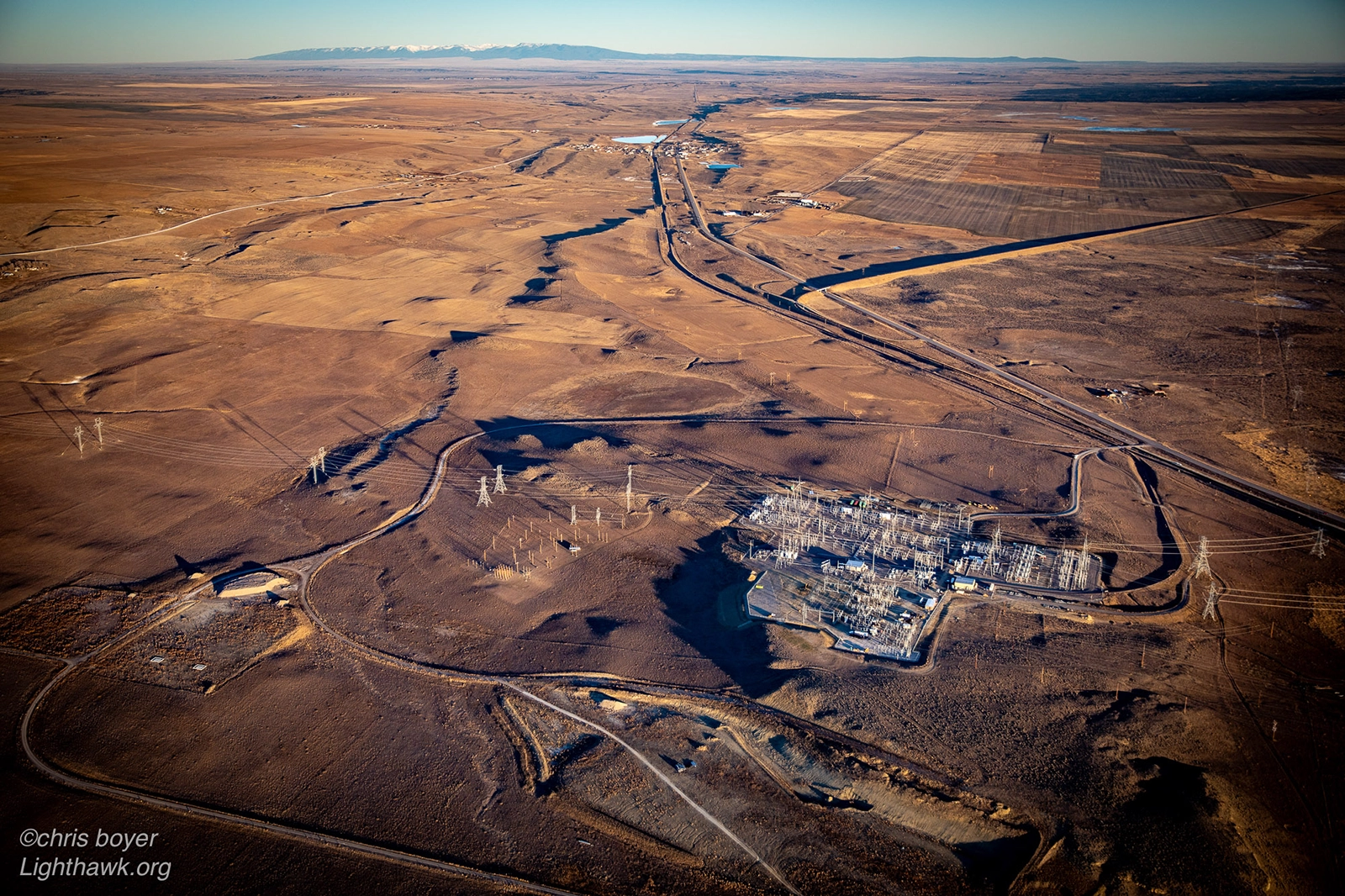
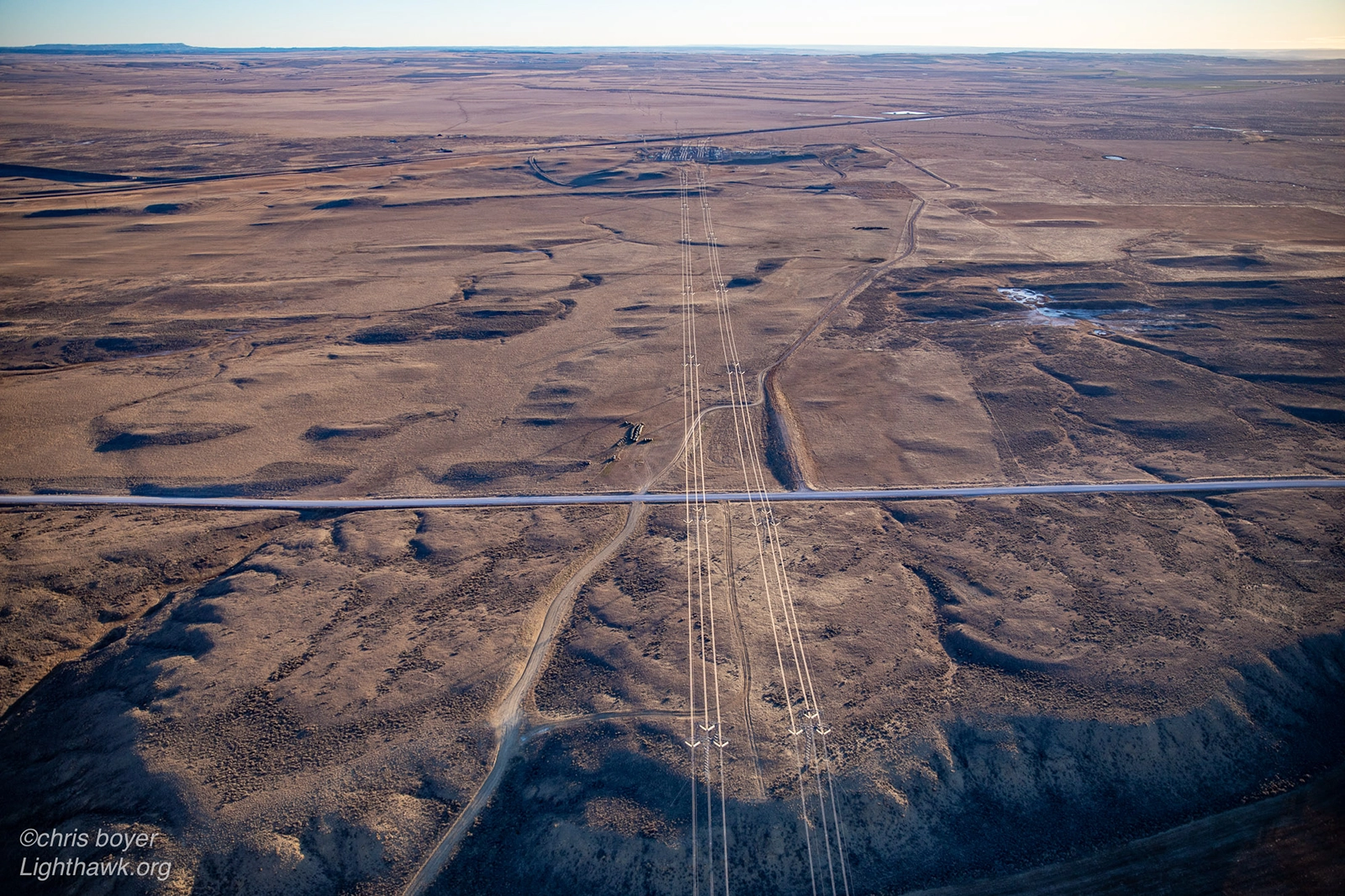
Date centers use massive amounts of electriciy. It Montana, much of the electricity is provided by coal-fired power plants, meaning a data center’s demand would increase the impact on climate change. Photo by Chris Boyer.
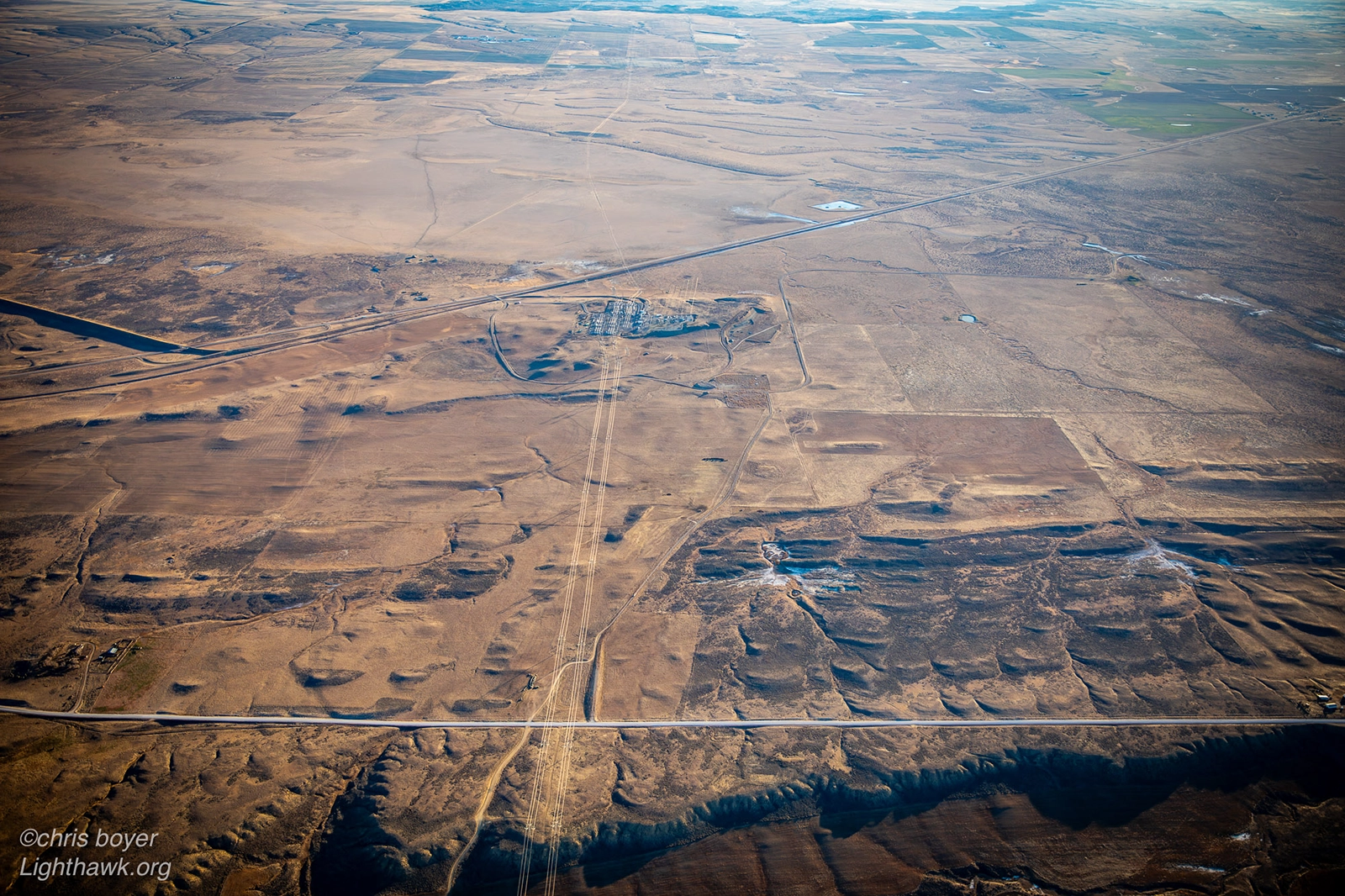
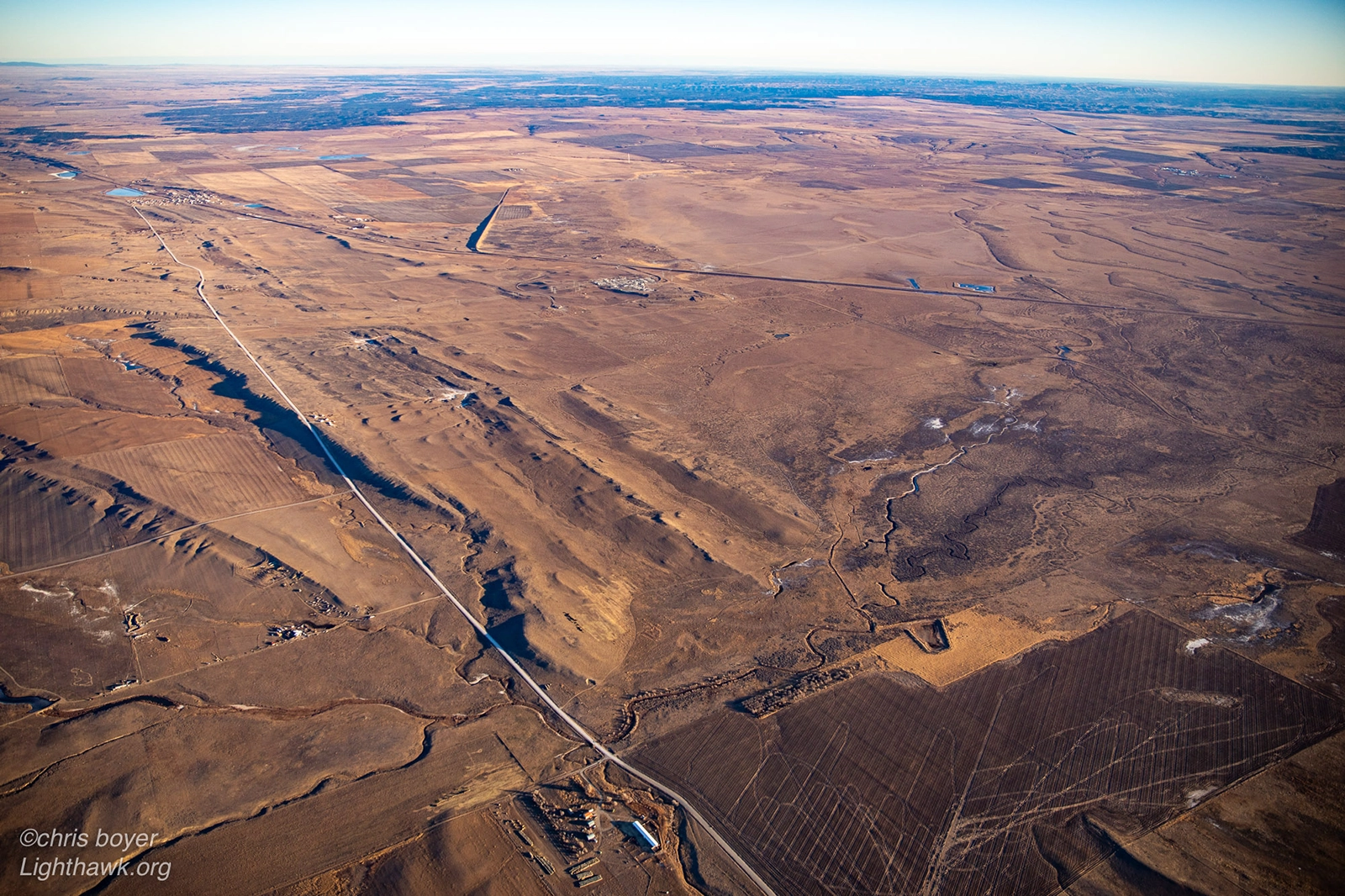
Broadview, Montana is a small community centered around agriculture. The water and electricity demands of a massive data center would likely impact the entire community. Photo by Chris Boyer.
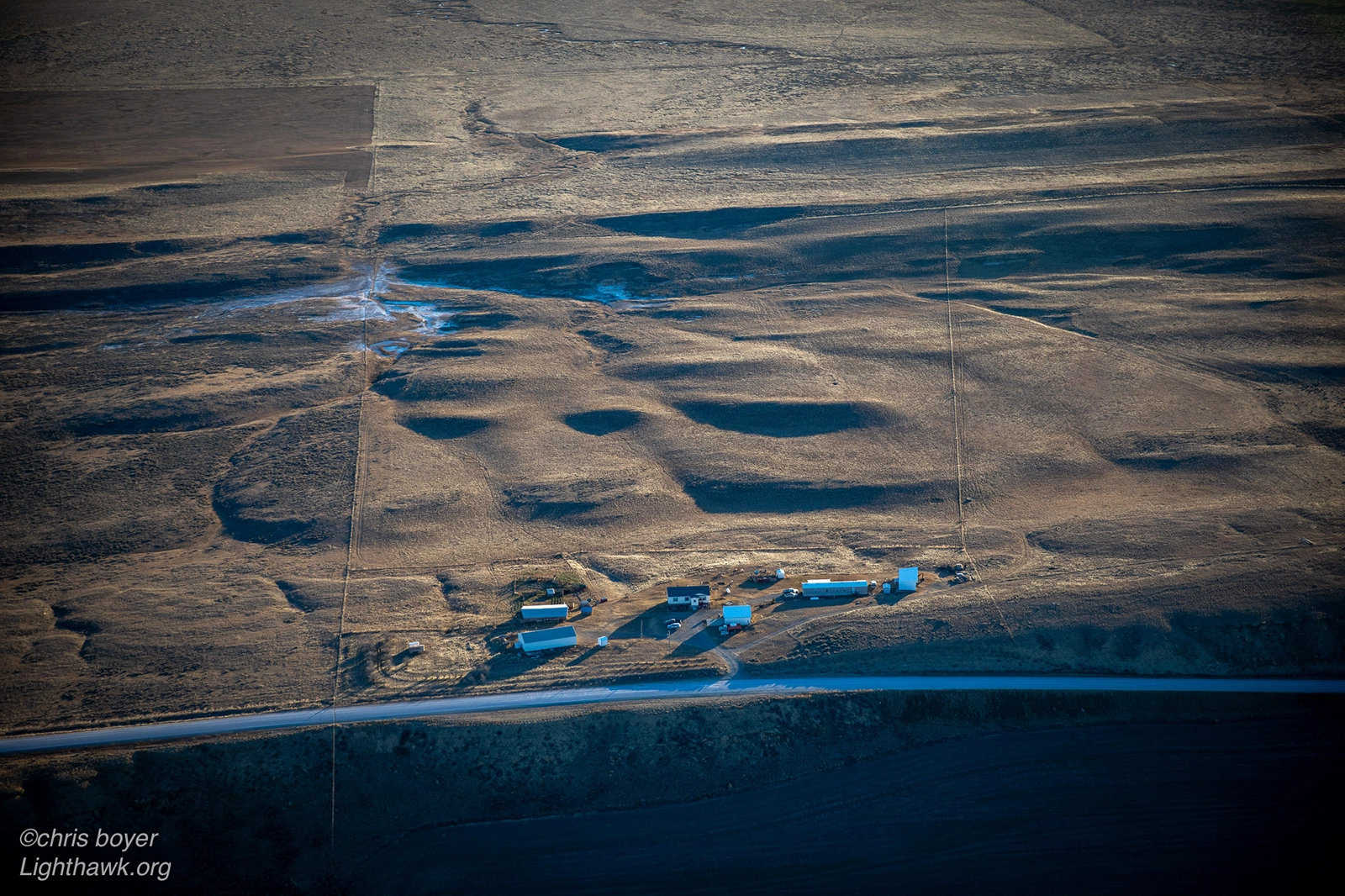
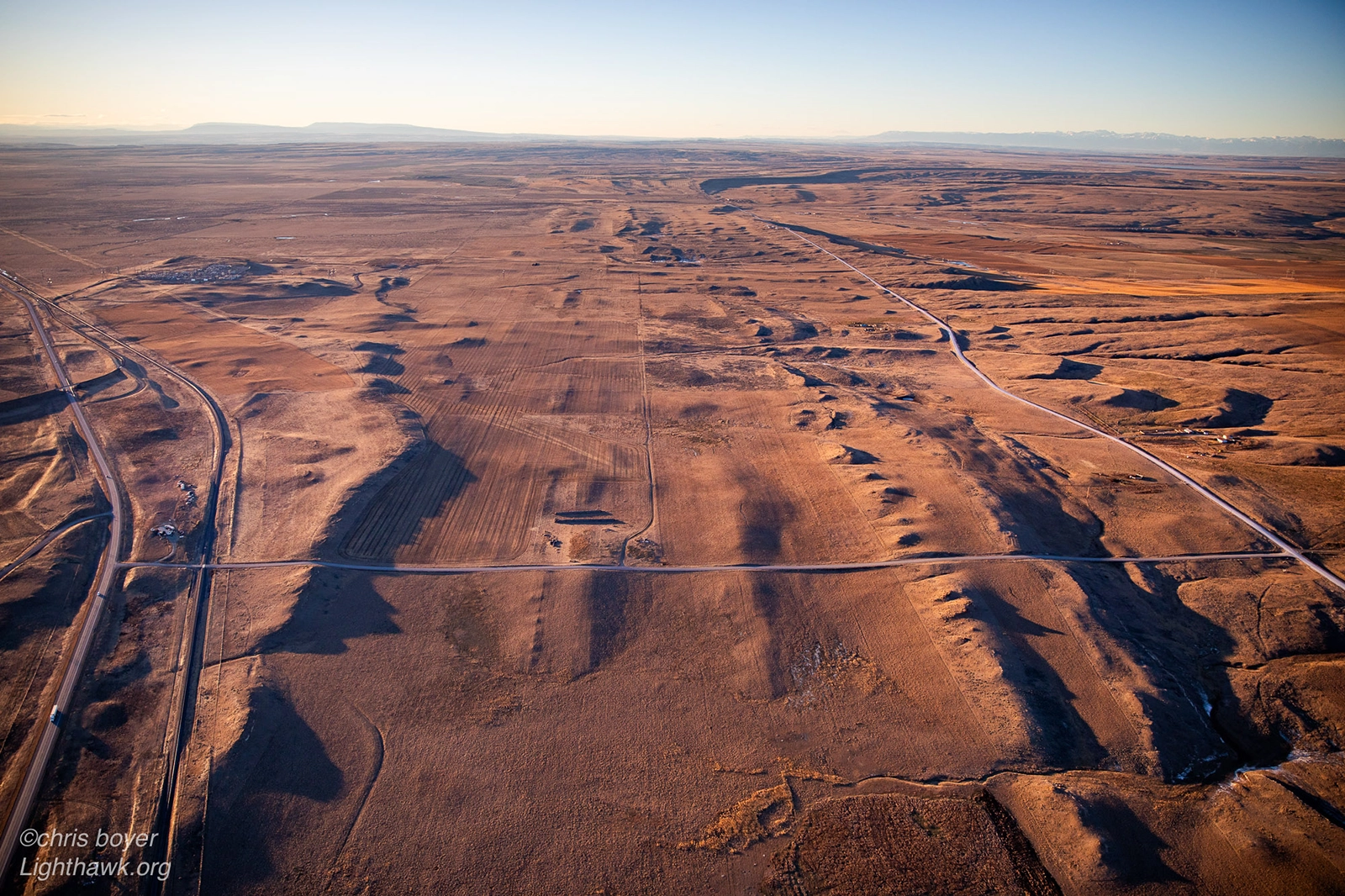
Our flight over Broadview captured imagery of the proposed site and the surrounding landscapes, documenting current conditions before any construction begins. The photos illustrate the community’s agricultural heritage and the area’s largely intact landscapes.
Anne Hedges, Executive Director of MEIC, raised concerns about the proposal’s environmental impact, “Right now, Montana is a free-for-all. Any data center who wants to come here has very few rules,” Hedges said. “If all of these facilities that want to get built are going to rely on fossil fuels, we’regoing to see more rain in winter months moving forward.”
Hedges hopes Montana will pursue legislation regulating artificial intelligence data centers. In 2025, 40 states proposed legislation related to AI data centers, including 16 states considering legislation focused on water usage.
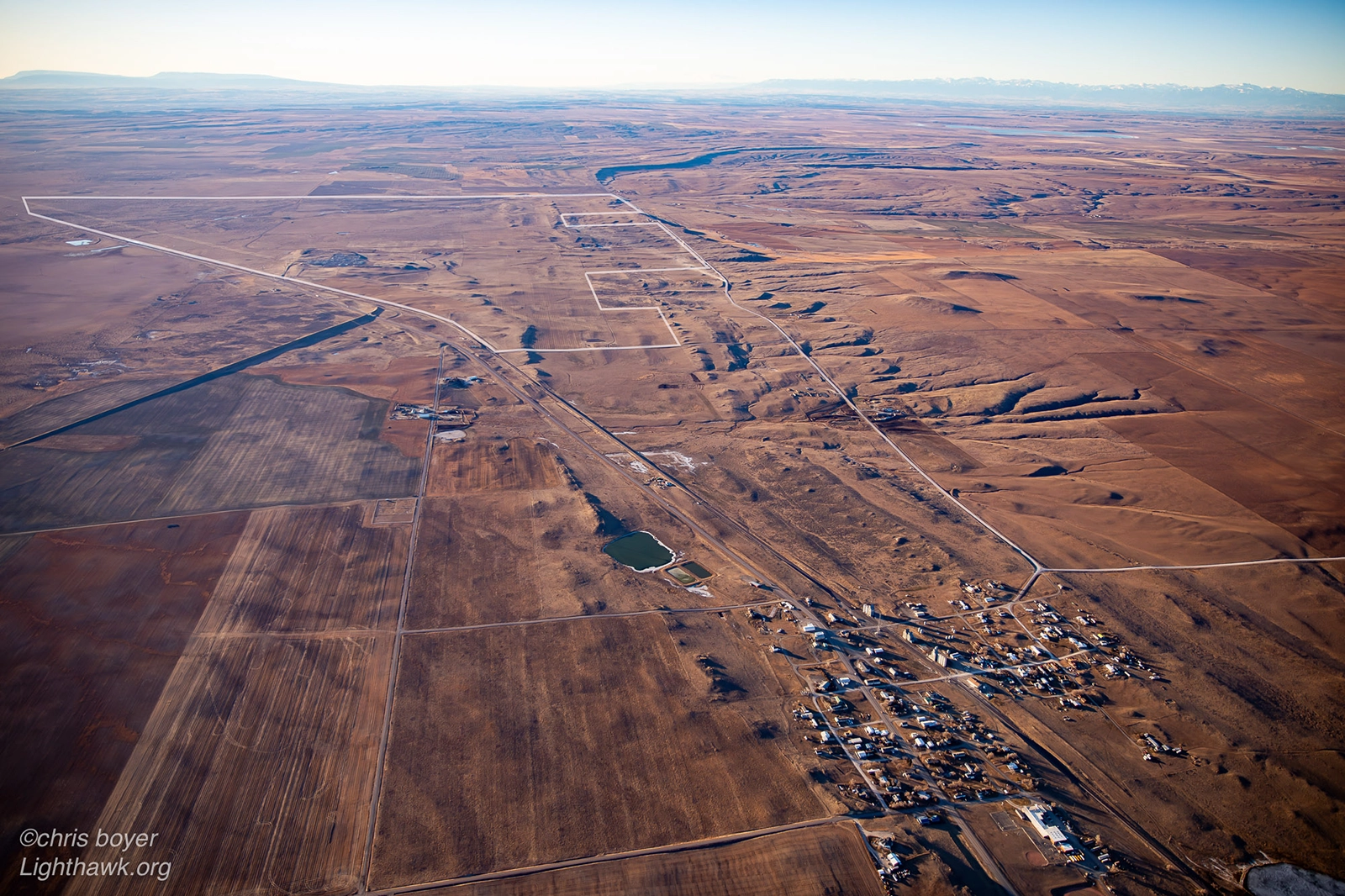
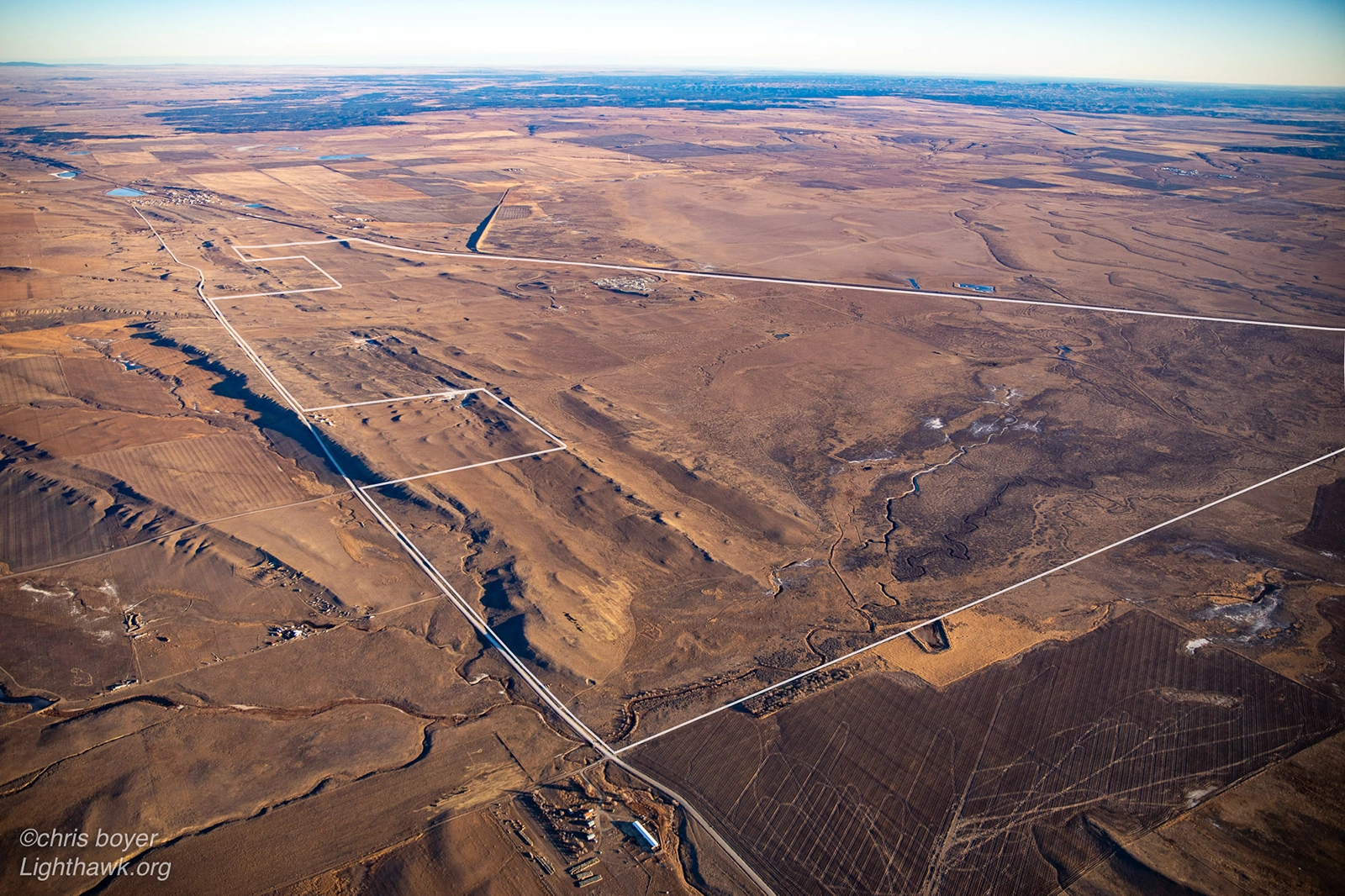
The white outline seen in this photo illustrates the size and location of the proposed data center. Compared with the town of Broadview (in the foreground), the aerial perspective shows just how massive the facility would be. Photo by Chris Boyer.
The unique landscape would be heavily impacted by the 5,000 acre data center. Conservationists in Montana are urging state leaders to consider regulation around such facilities to protect the environment and nearby communities. Photo by Chris Boyer.
The imagery collected during this flight will help MEIC and others put a face on the area under consideration. The aerial perspective helps illustrate how a facility like the one proposed could impact surrounding lands, includinglocal water resources and climate impacts tied to fossil fuel use. LightHawk’s flight and the images collected will supporteducation efforts with legislators and the Broadview community, informing discussions about data center regulation to protect Montana communities and the state as a whole.
Chris is a unique member of the LightHawk community. He serves as Program Manager for the Northern Rockies region and is also a volunteer pilot who has been flying with us for 20 years. An accomplished aerial photographer, Chris hasextensive experience flying exactly these kinds of photo missions.
Photos by Chris Boyer