Helping an Endangered Quail Take Flight Again
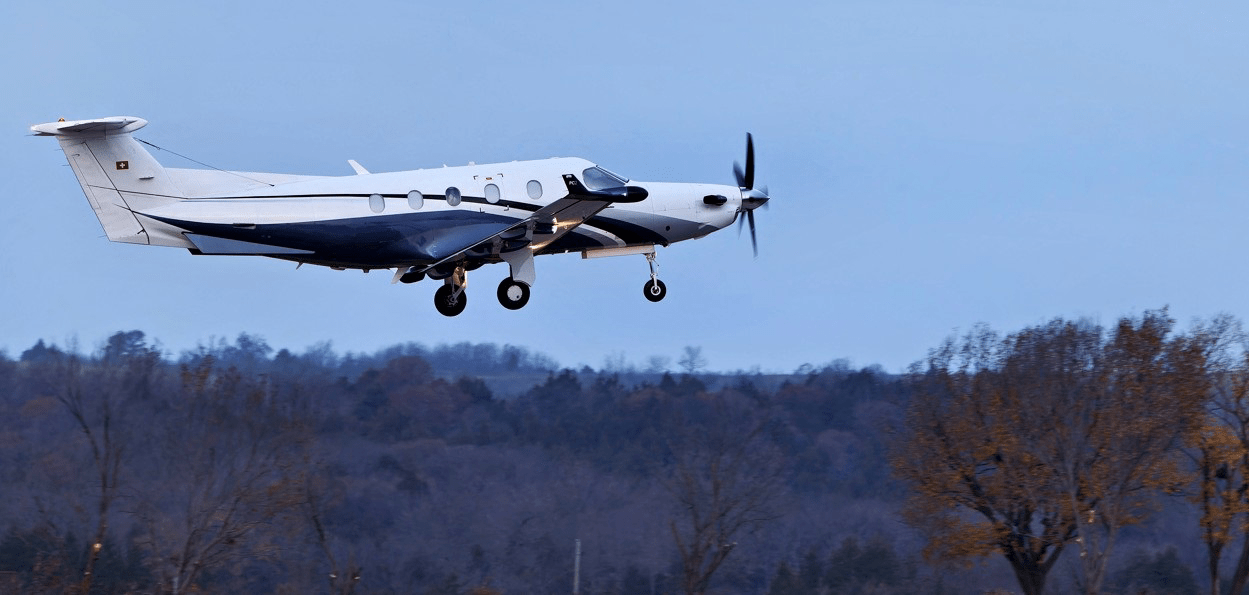
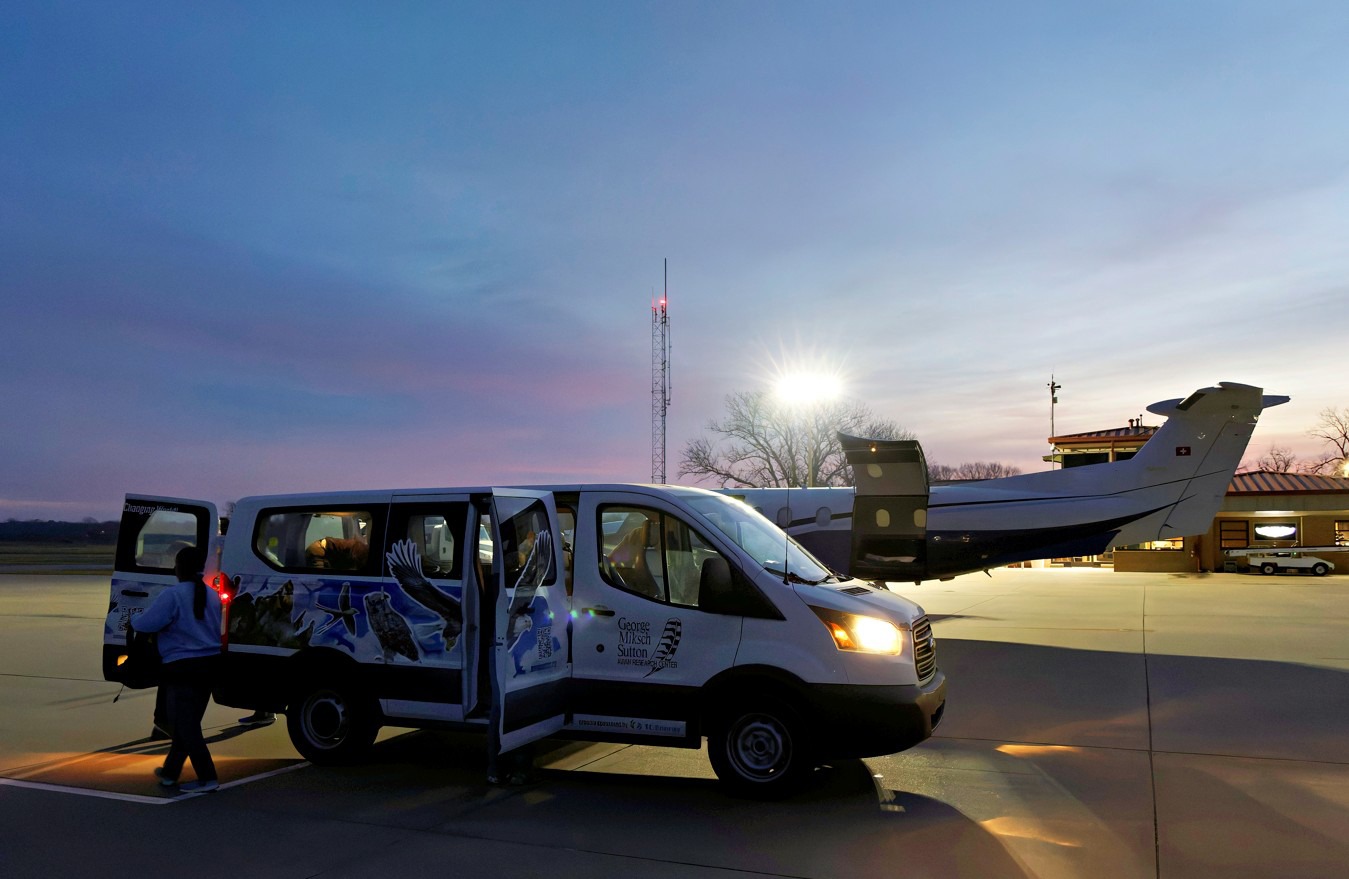
Jack Long’s Pilatus PC-12 takes off loaded with endangered masked bobwhite quail juveniles headed for their new home in Arizona where they will be released to the wild. Photo: Don Wolfe | Pilot: Jack Long.
There has always been a special place in our hearts for our fellow aviators, and we are not just talking about pilots. LightHawk works with partners across the United States to conserve endangered birds, and for several years we have supported the U.S. Fish and Wildlife Service and the George Miksch Sutton Avian Research Center by transporting masked bobwhite quail from their breeding facility to release sites in the wild.
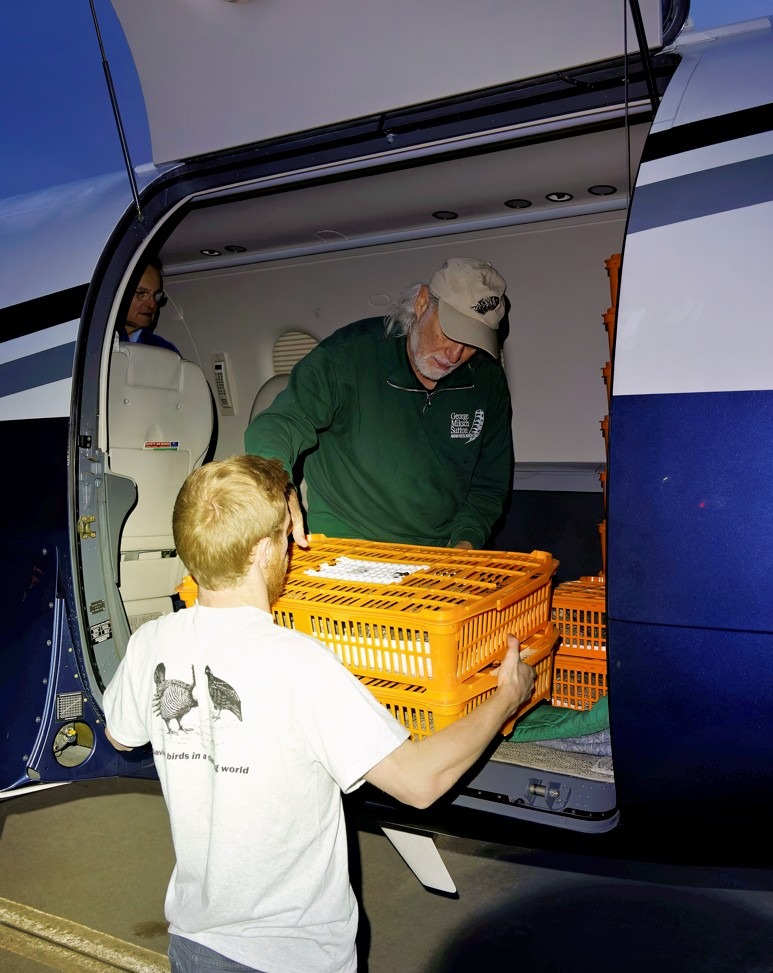
Recently, LightHawk volunteer pilot Jack Long stepped up to transport 24 crates of juvenile birds from Bartlesville, Oklahoma to Tucson, Arizona for release on the Buenos Aires National Wildlife Refuge (BANWR). Each crate held multiple birds for a total of about 300 masked bobwhite quail flown. A member of the Sutton Center staff traveled with Jack to monitor the birds throughout the cross-country flight.
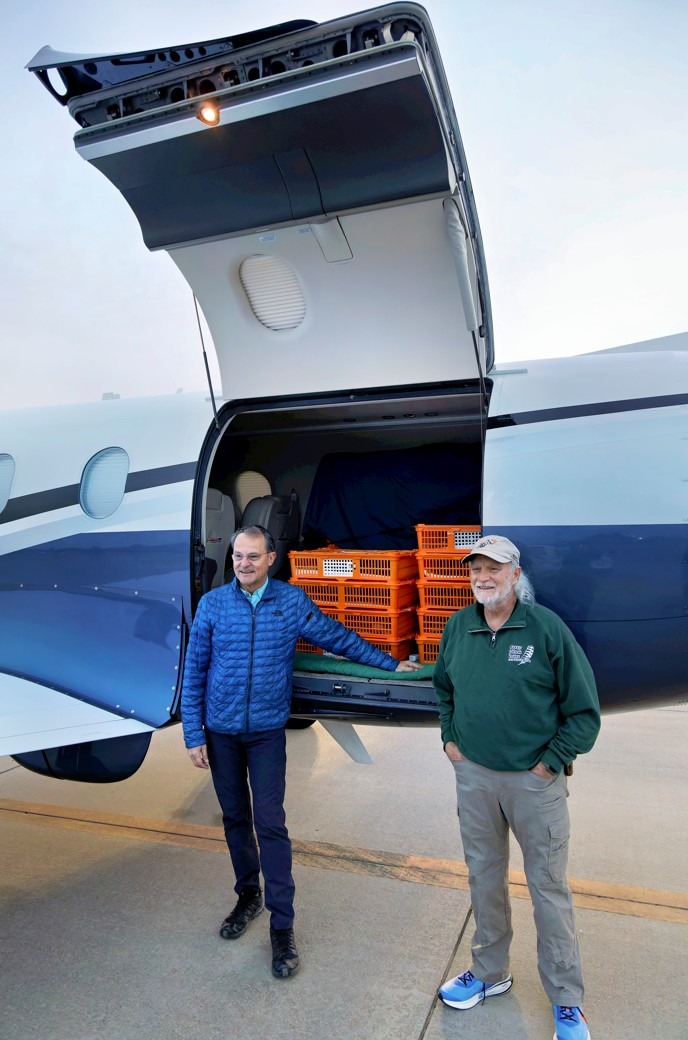
The Pilatus has a big cargo door making it ideal for loading and transporting wildlife crates. Photo: Don Wolfe | Pilot Jack Long
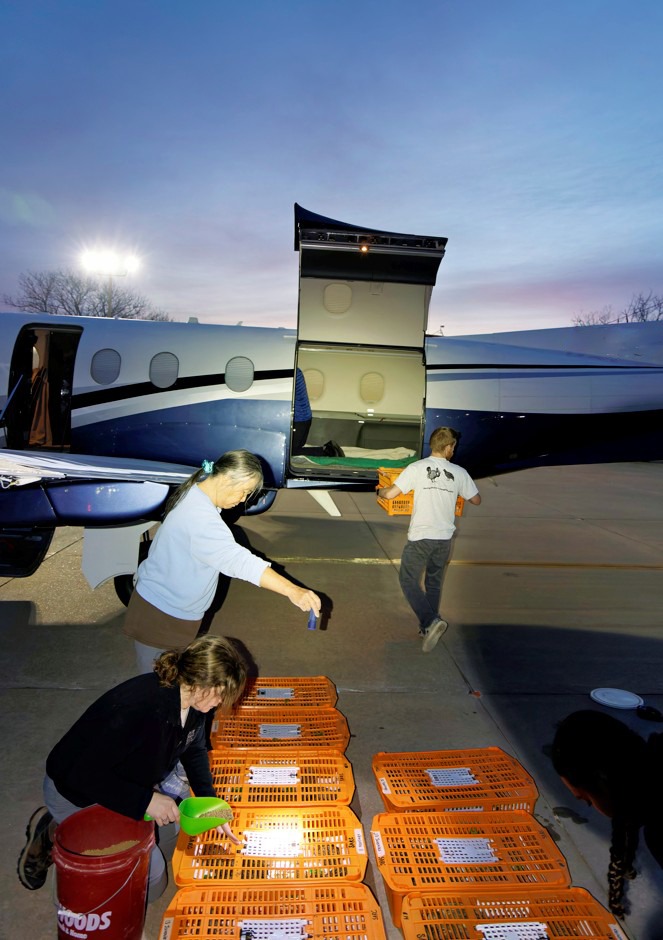
Staff from the Sutton Center feed the birds ahead of loading them into the plane for their trip. Photo: Don Wolfe | Pilot: Jack Long.
Jack’s Pilatus PC-12 was ideal for this mission. Its size allowed all 24 crates and the handler to travel in a single trip, and its speed shortened the overall journey. The aircraft also kept the birds at a comfortable temperature, further reducing stress.
Transporting these young birds by air greatly reduces the time they are exposed to stress. What would otherwise be a long and difficult trip on the ground becomes a 4-hour flight, allowing the chicks to arrive in better physical condition. This leads to lower mortality and improved survival rates after release.
Today, the wild population of masked bobwhite quail on BANWR is estimated at about 100 birds following years of releases, many of which involved LightHawk flights. Found nowhere else in the United States, this striking subspecies of the northern bobwhite is native only to extreme southern Arizona and Sonora, Mexico.
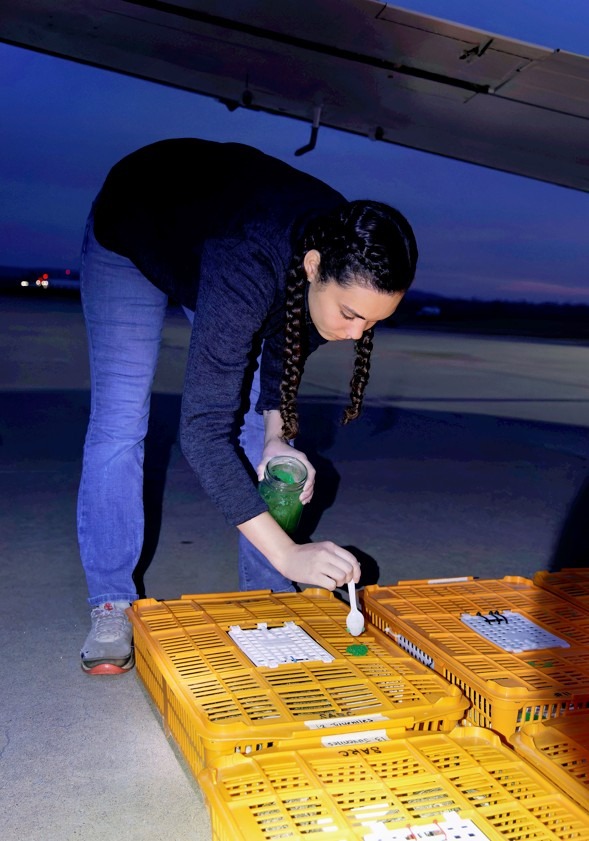
A Sutton Center staff member feeds the juvenile quail on the ramp before they are loaded into the plane for the flight. The short flight takes the place of a 20-hour car trip, reducing stress on the birds and improves their changes for success. Photo: Don Wolfe | Pilot: Jack Long
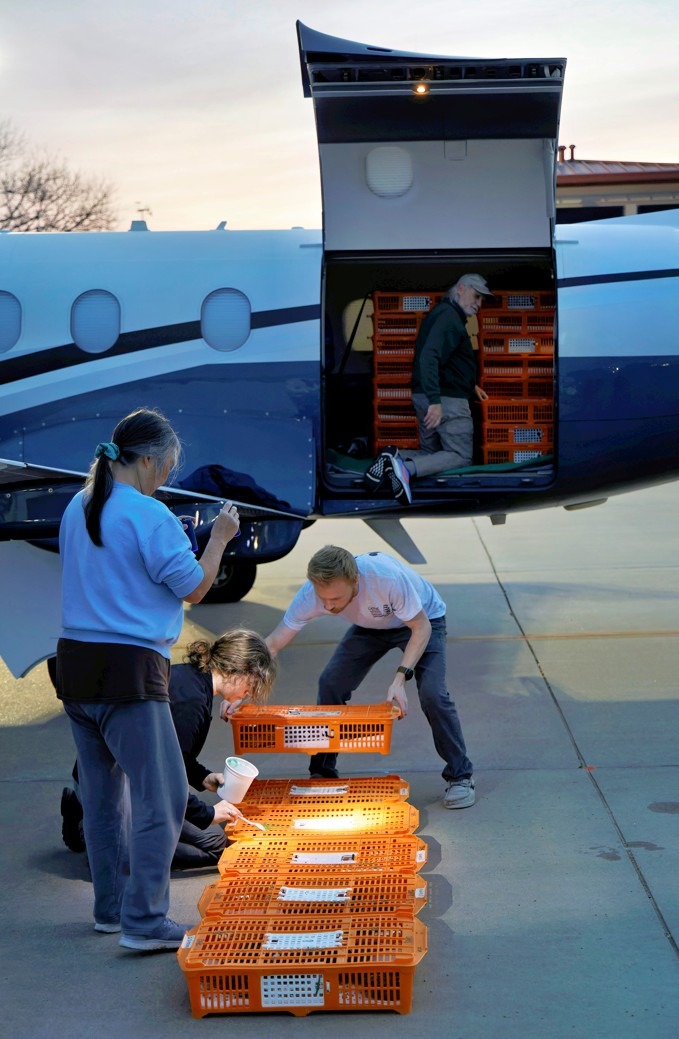
Staff members load the crates into the Pilatus. Photo: Don Wolfe | Pilot: Jack Long
This flight and others like it directly support the U.S. Fish and Wildlife Service and our conservation partners with the mission to recover this endangered species and restore the fourth native quail species to southern Arizona.
The newly released birds will be monitored to deepen understanding of the subspecies and to guide habitat management on the refuge and for partners in Mexico.
LightHawk volunteer pilots have played a meaningful role in restoring this species and will continue working with partners like the U.S. Fish and Wildlife Service and the Sutton Center to protect and restore endangered birds, sharing the gift of aviation with our fellow flyers.
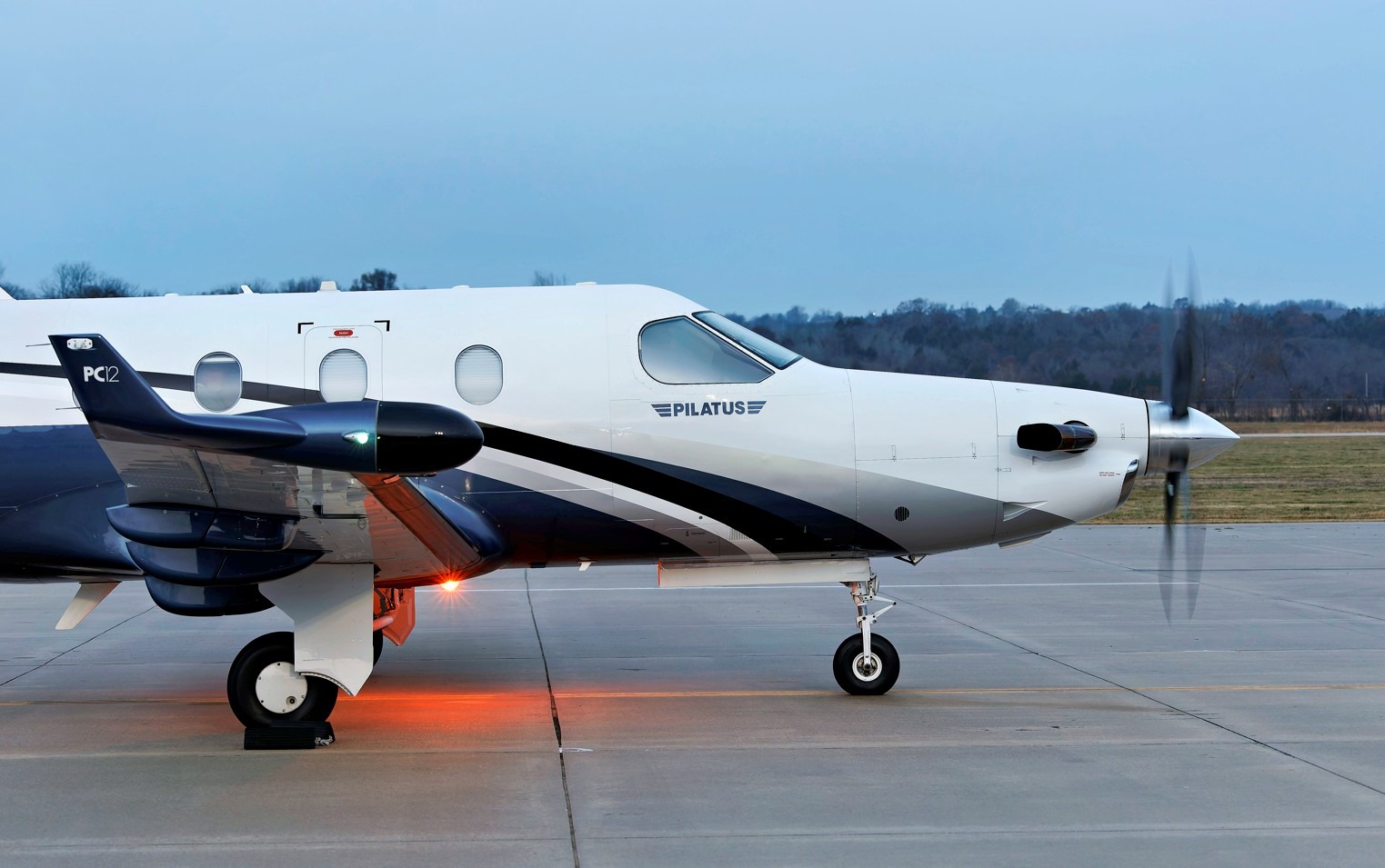
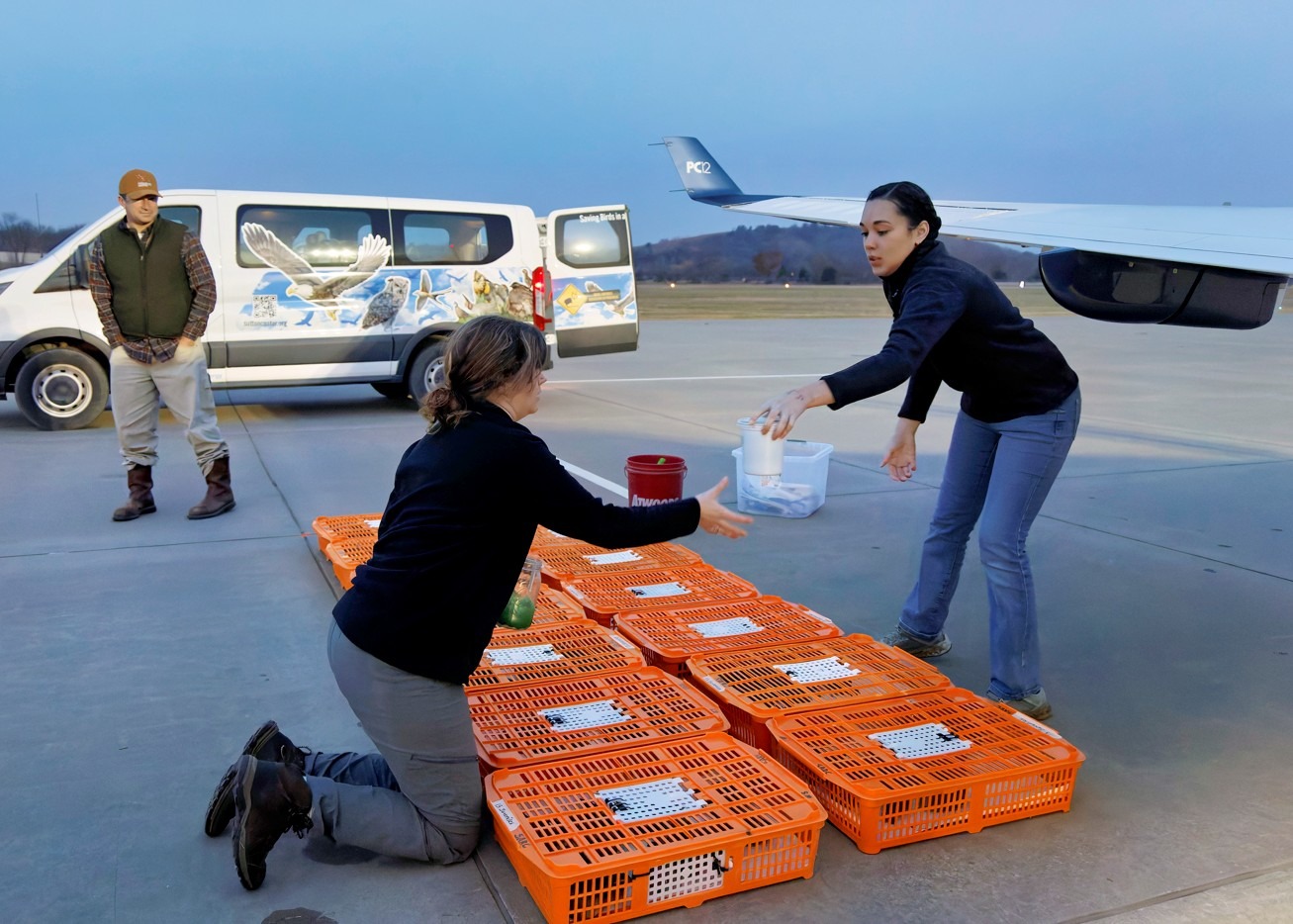
Photos: Don Wolfe | Pilot: Jack Long