
A Flight I’ll Never Forget: Witnessing A Mission of Hope
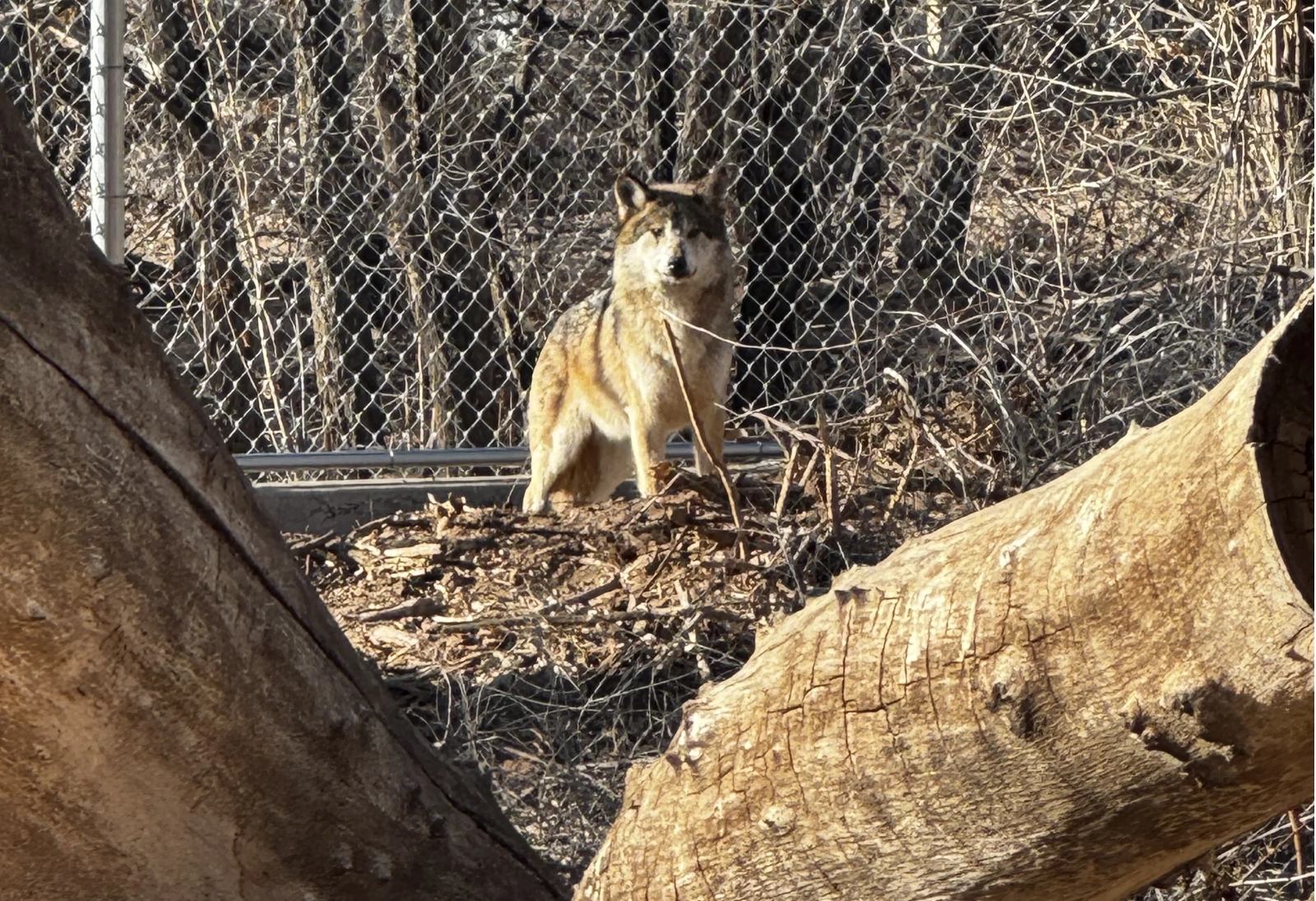
LightHawk transported Mexican wolf “Mittermeier” to his new home in a behind-the-scenes conservation facility at the ABQ BioPark in New Mexico. There he is being introduced to a female Mexican wolf in hopes of creating a new breeding pair. Photo by Joanna Weitzel.
This month’s Above & Beyond features a special perspective from Chief Advancement Officer Joanna Weitzel.
The morning began in the quiet stillness of a small airport in Portsmouth. Snow covered the ground, and for this Southerner, it was a chilly morning. My colleague Jonathan Milne and I met one of the pilots, who slid open the hangar doors to reveal the aircraft that would carry us—and our passenger—across the country: a Pilatus PC-24. It was an impressive sight. We were transporting an endangered Mexican wolf, and he would be making the journey in remarkable safety and speed.
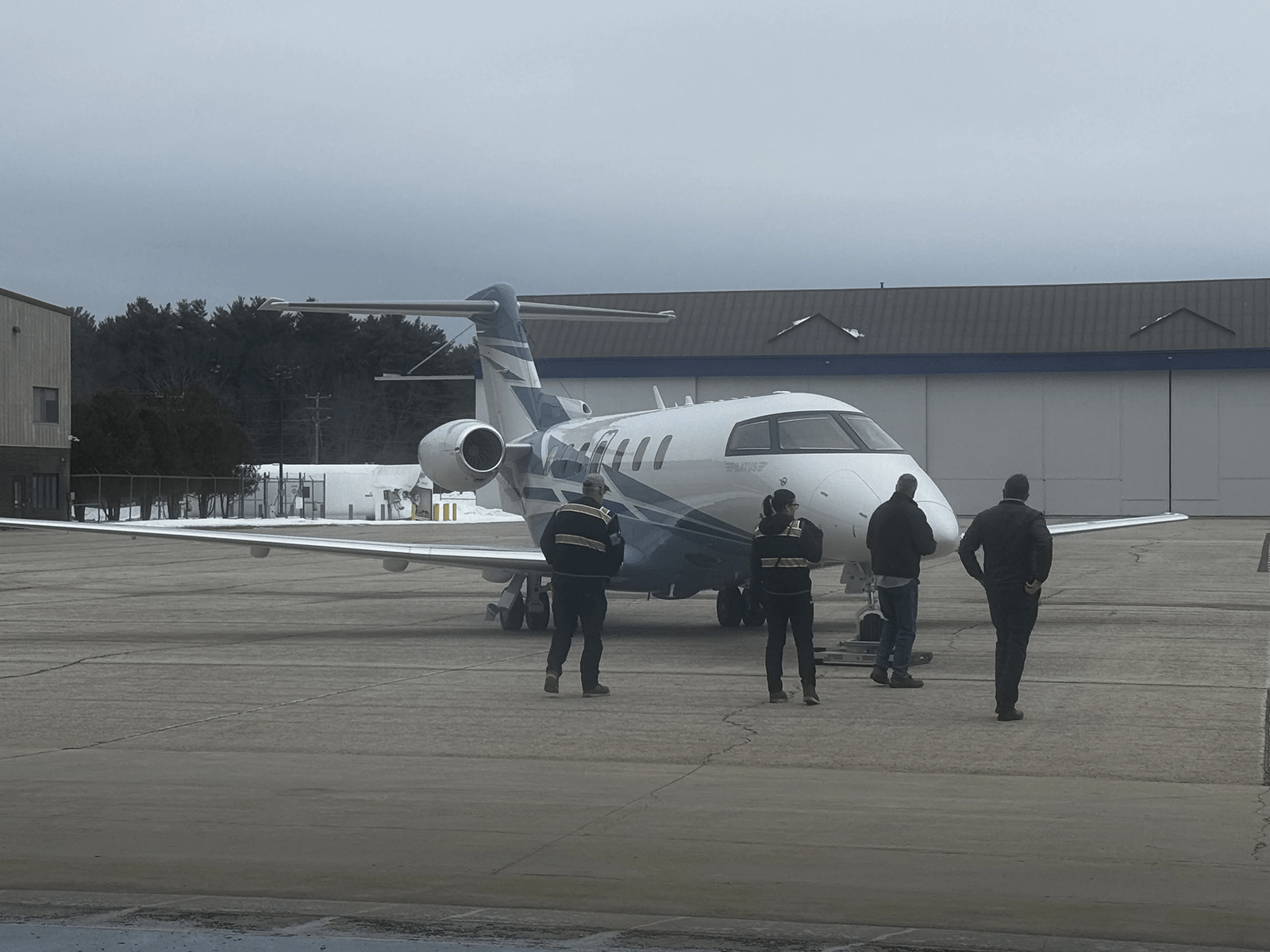
The Pilatus PC-24 is moved out of the hangar by ground crew before the wolf’s crate is loaded for the trip to New Mexico. Photo by Joanna Weitzel.
My role at LightHawk is to help connect people to this work. For nearly three years, I’ve worked alongside our program team and volunteer pilots, sharing stories and building support for the missions that make conservation from the air possible. But this was different. This time, I was on the flight. And this time, the passenger was a species fighting for its survival.
Looking Into His Eyes
Before we departed, I found myself standing near the crate. Having spent much of my career in wildlife care and conservation—working with a variety of species from hummingbirds to bobcats—I knew the unspoken rules. Move calmly. Stay quiet. Give them space. Don’t add to their stress. Still, I couldn’t help but look.
Through the door of the crate, I saw him. Mittermeier is his name. Alert. Quiet. Beautiful.
I knew he was stressed, even if he appeared calm. Wild animals don’t understand the care behind human actions. They don’t know the distance being shortened for their safety. They only know they’ve been taken from what’s familiar. And yet, this journey was part of something larger. He was being flown to ABQ BioPark in New Mexico, where a potential mate was already waiting for him. With just over 250 Mexican wolves left in the wild, every pairing matters. Every pup matters.
The Power of Flight
When we lifted off, I was struck by the speed of it all, the ground falling away beneath us. Inside, there was space to breathe, talk, and reflect. Pete Costello, an assistant curator from Zoo New England accompanying the wolf, told us more about the Association of Zoos & Aquariums (AZA)’s Saving Animals From Extinction (SAFE) program. Tom Haas, our volunteer pilot, shared his interests and what keeps him flying for wildlife, while another pilot, Brian Dawson, graciously answered my many questions, deepening my understanding of aviation.
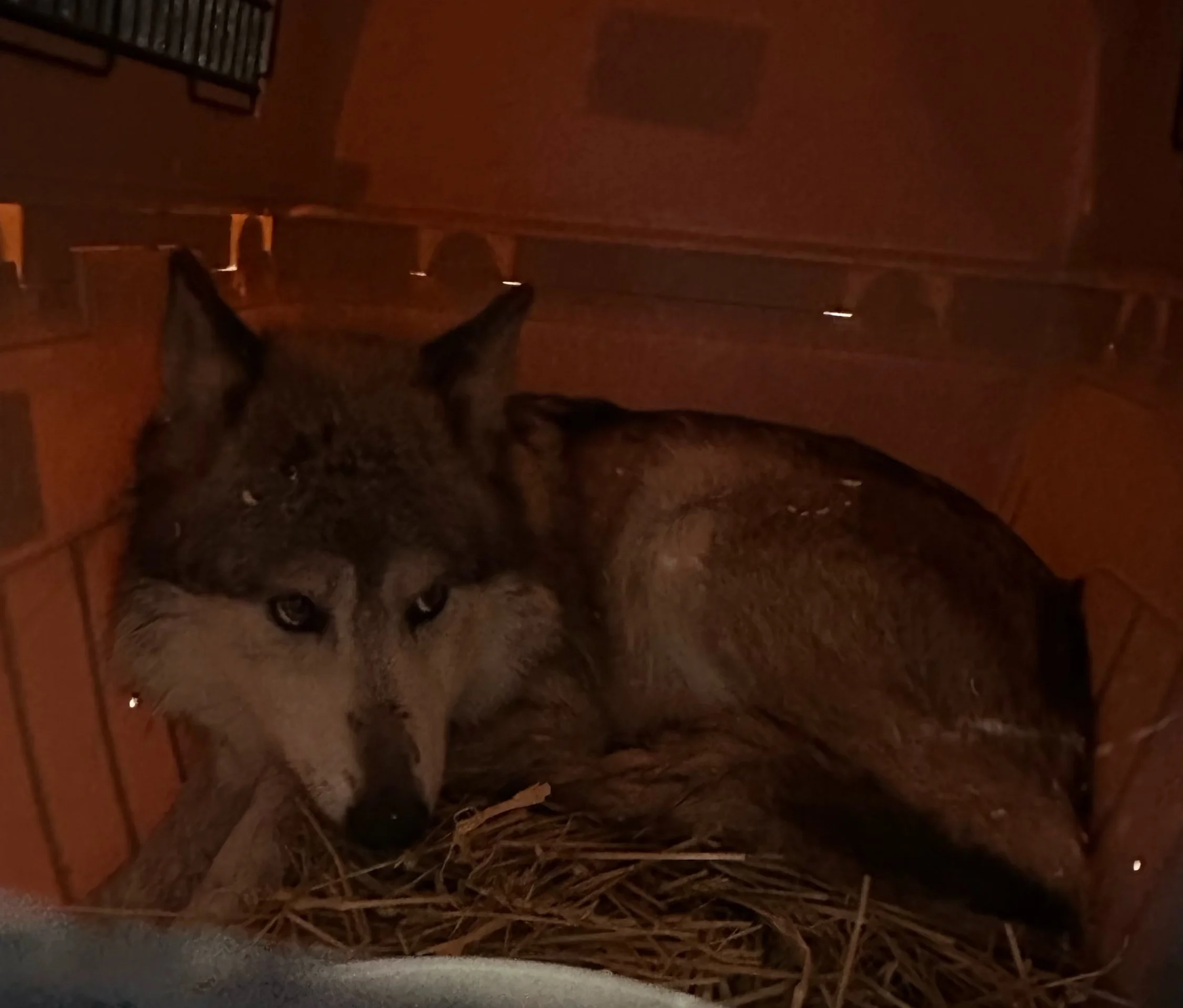
Mittermeier settles into his crate ahead of the flight to his new home. Photo by Tom Haas.
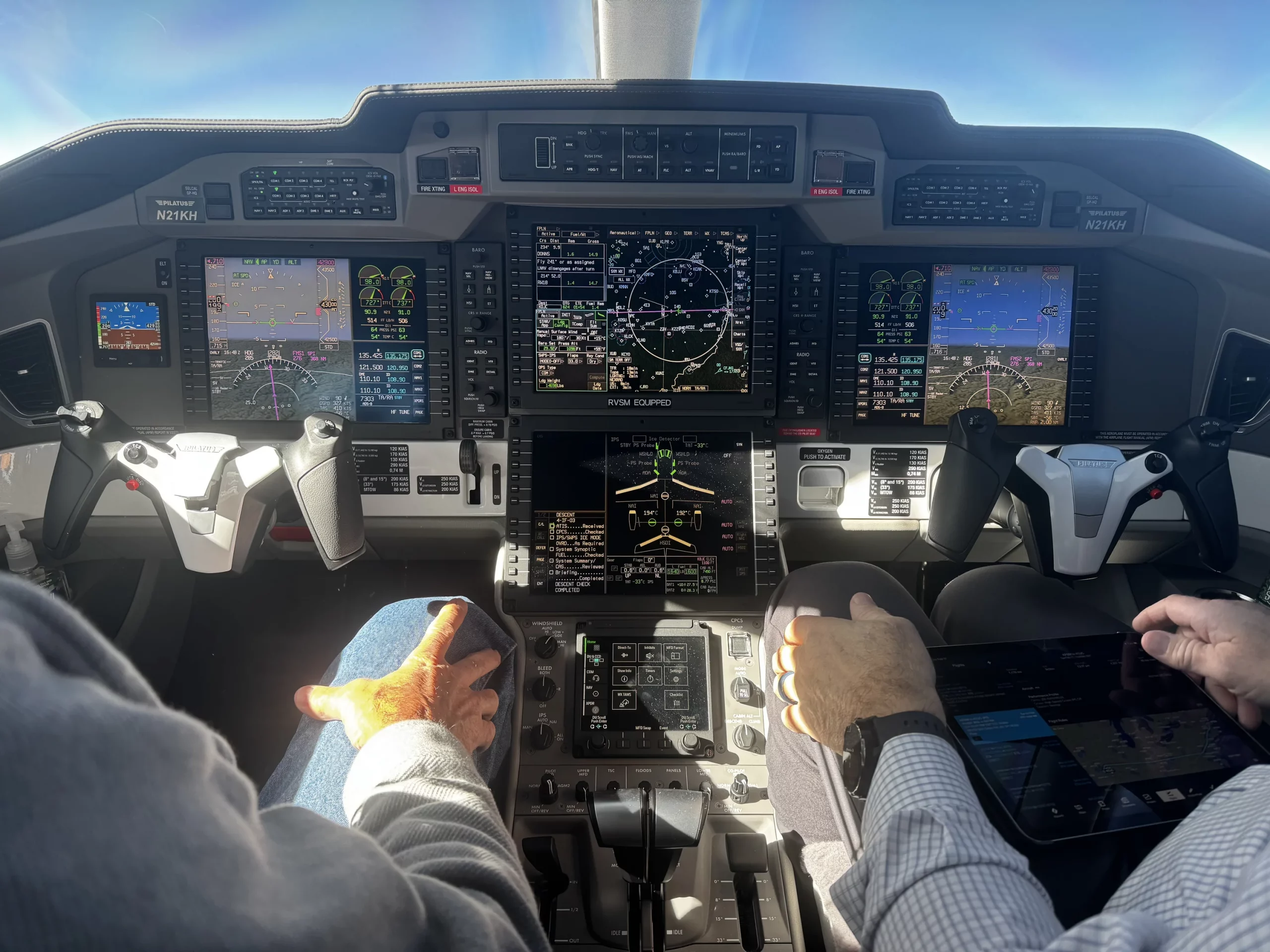
LightHawk volunteer pilot Tom and his copilot monitor instruments during a cross-country mission. The Pilatus PC-24 provides an ideal platform for transporting endangered species safely and efficiently. Photo by Joanna Weitzel.
I’ve spent most of my career in nonprofit conservation, and aviation was not part of my world before LightHawk. Now I see it differently. Aviation isn’t just transportation. It’s access. It’s connection. It’s time saved when time matters most. It’s a tool that allows conservation to move at the speed recovery demands.
A New Beginning
When we arrived in New Mexico, ABQ BioPark staff carefully transferred the crate from the plane to a behind-the-scenes enclosure at the Mexican Wolf Conservation Facility. I found myself wondering how the wolf would react when released. Would he bolt? Or freeze in fear?

ABQ BioPark staff members move Mittermeier’s crate into the enclosure before releasing him into his new home.
The door opened. Mittermeier hesitated for a mere second. Then he ran.
Mittermeier sprinted into his new home, alive with instinct and awareness. In the neighboring space, his future mate ran as well—circling, watching, sensing the change. Eventually, they approached the shared fence, meeting in the only way they could for now. If their introduction succeeds, their pups will one day be candidates for release into the wild. And because they were born here, they may never need a flight like this one.
Standing there, I felt a mix of emotions I struggle to fully describe. Sadness, knowing how close we’ve come to losing this species entirely. Gratitude for the people who dedicate their lives to preventing that loss. And hope—real, tangible hope.
More Than One Wolf
This was my first LightHawk mission, and it resonated with me in a way I didn’t expect. With my background in animal care, I felt the weight of it. Knowing this one wolf could help bring new pups into the world made it real. Being there to document it was special.
Conservation is complex. It requires people with different skills, perspectives, and expertise. It requires those who care for animals, those who study them, those who protect and restore their habitats, those who advocate for them, and those who make it possible to move them safely across a country when their survival depends on it.
And sometimes, it requires a plane.
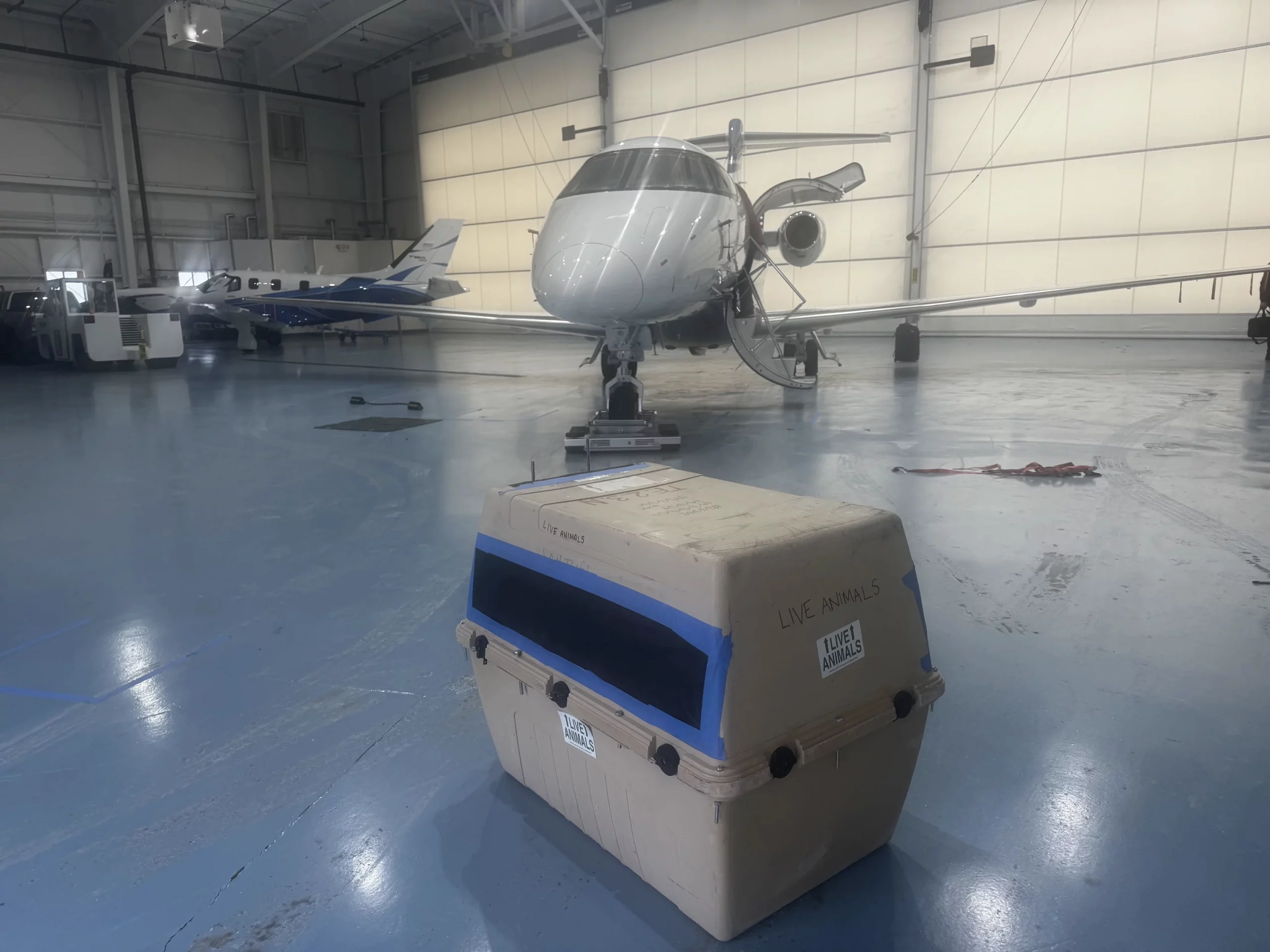
The crate sits near the aircraft ahead of the cross-country flight. Photo by Joanna Weitzel.
This was one moment in a much longer journey. The challenges facing Mexican wolves, and so many other species, are ongoing. But on that cold morning in New Hampshire, and later, on that windy afternoon in New Mexico, I saw what’s possible when people come together with a shared purpose.
One flight at a time.
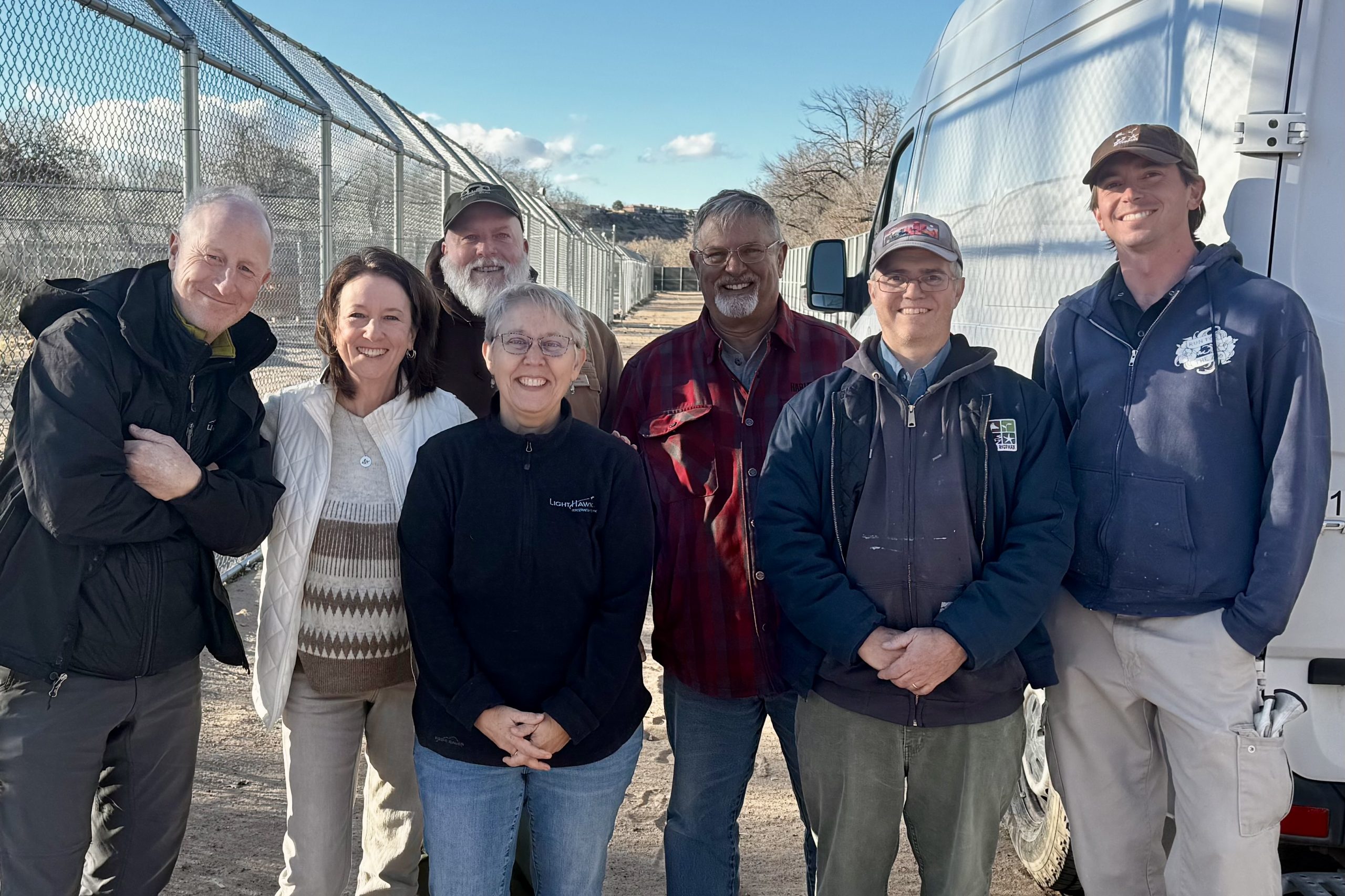
LightHawk staff with partners from Zoo New England and ABQ BioPark after Mittermeier’s introduction into his new home.