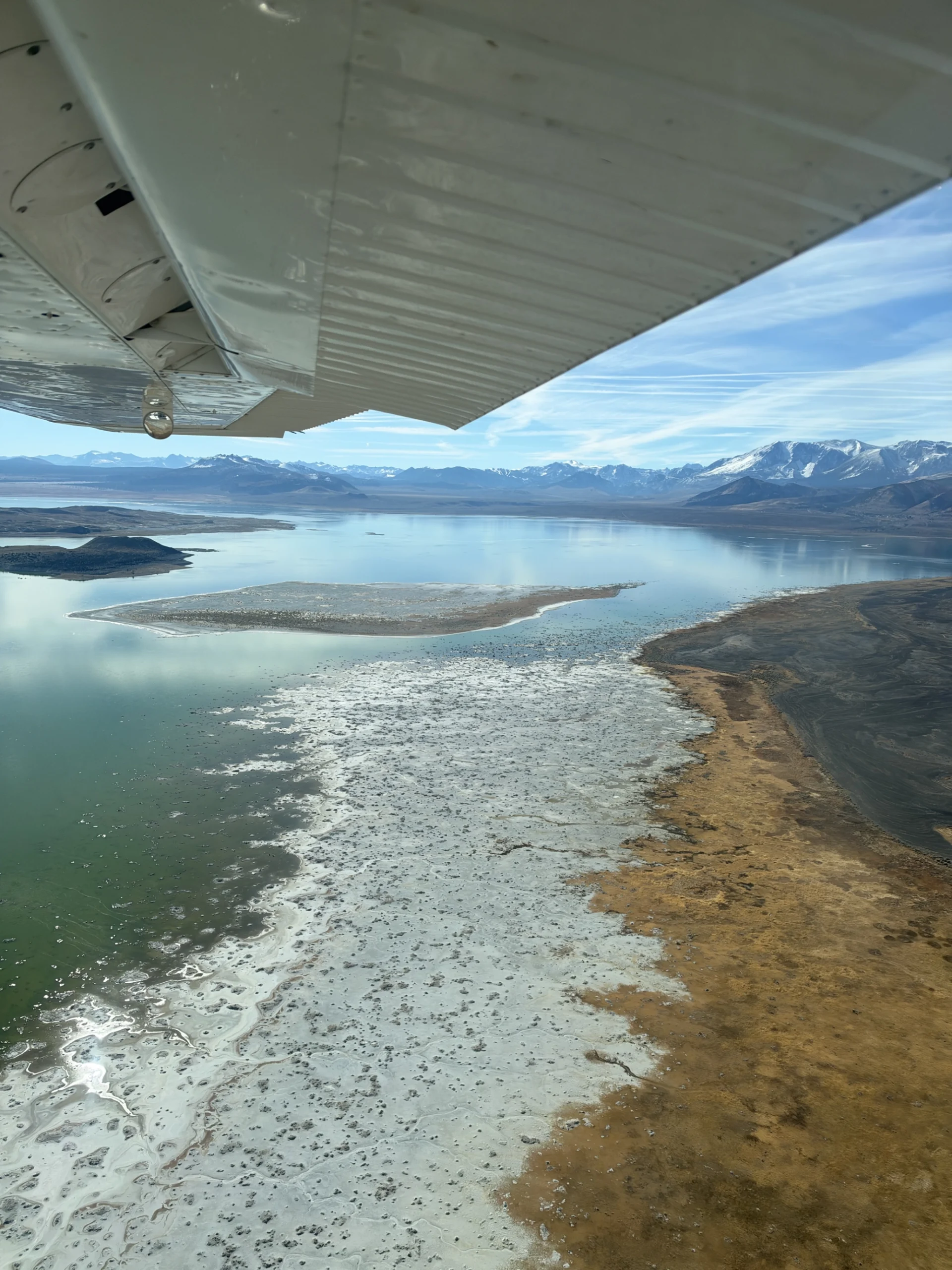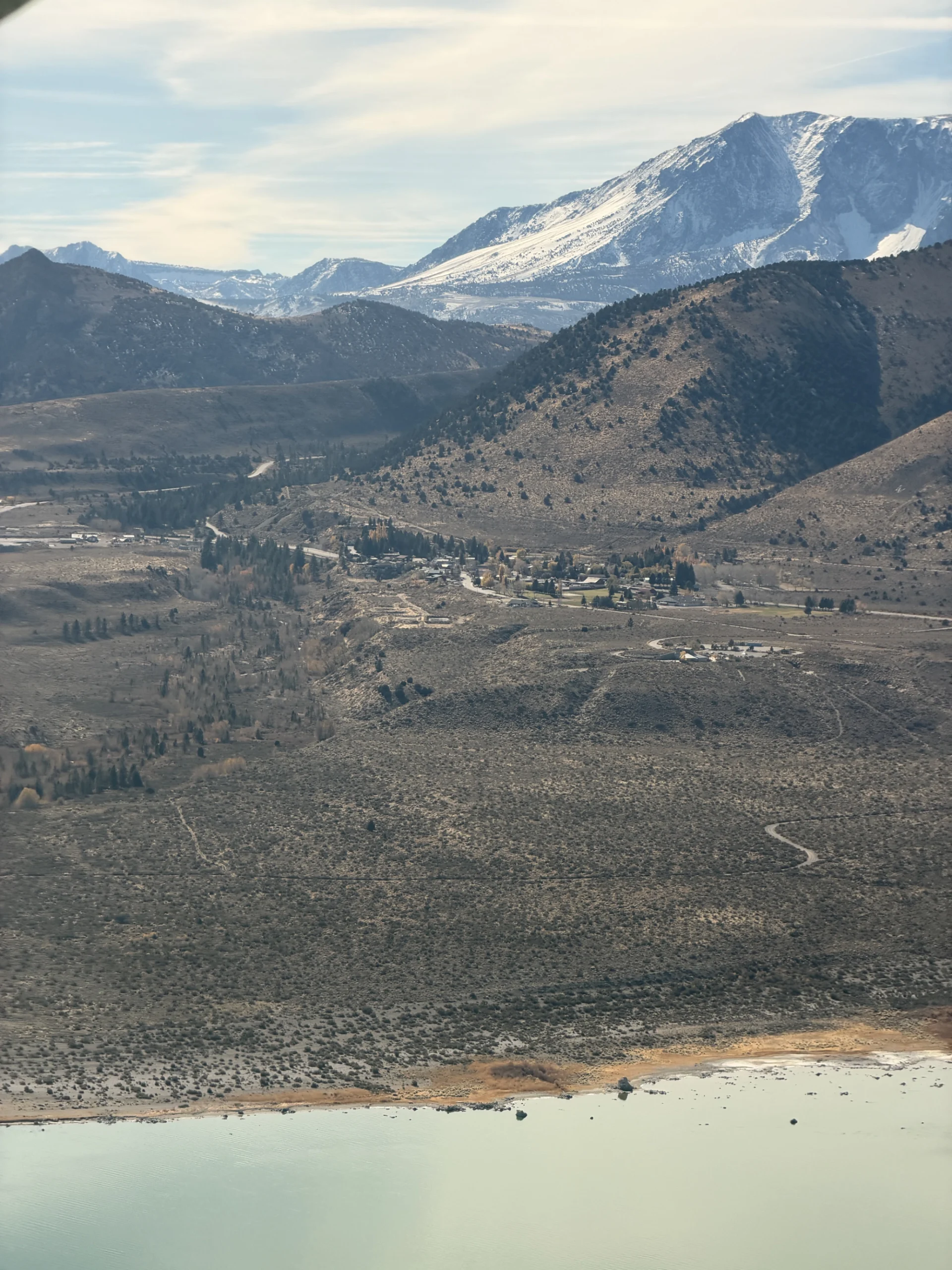
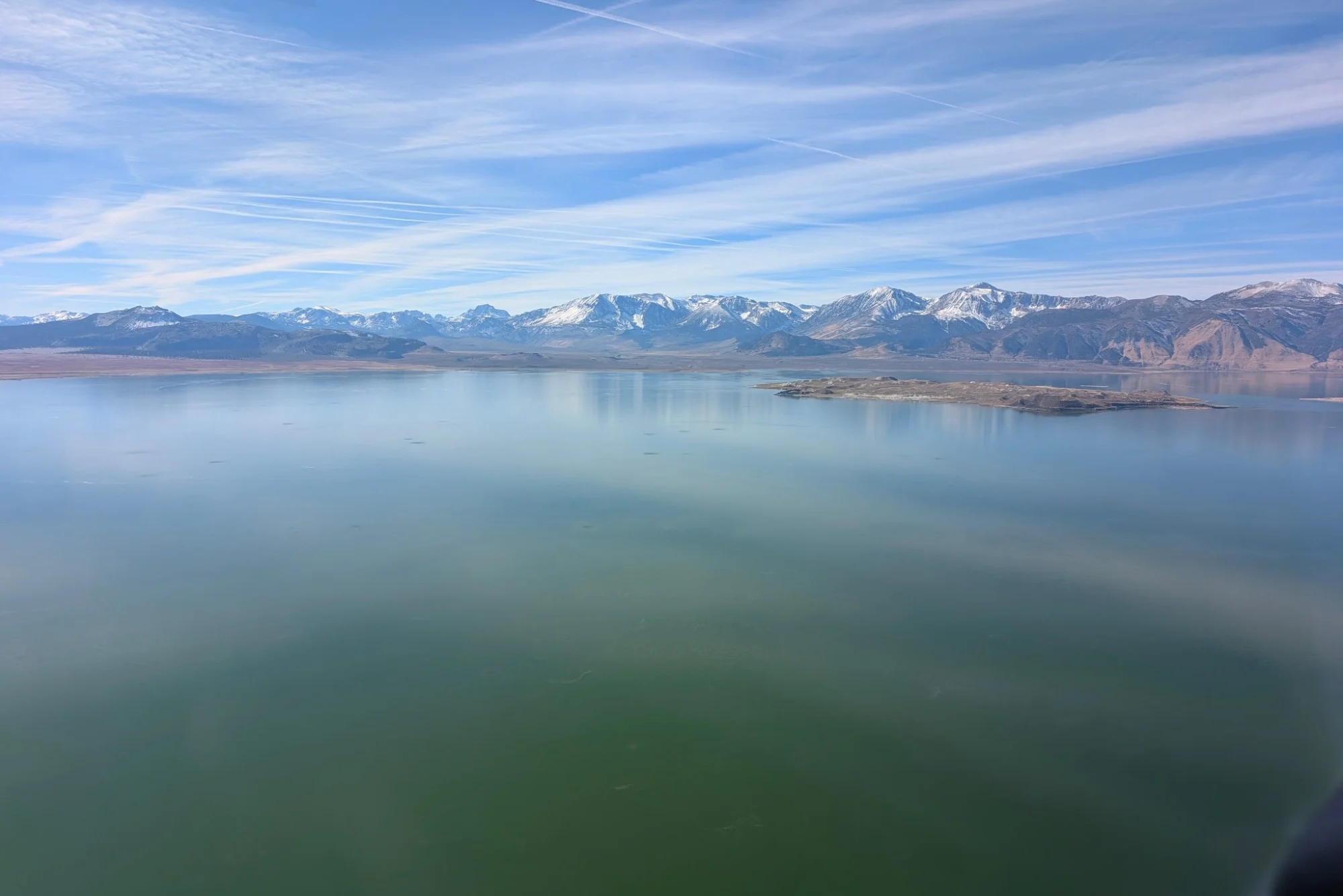
California’s Mono Lake is ancient and saltier than the ocean. With no natural outlet, the lake loses water through evaporation, leaving salts behind. Brine shrimp and brine flies thrive in its salty waters, and each fall, migrating eared grebes come to feast on the shrimp.
Eared grebes are small waterbirds that dive for their food. They spend weeks at Mono Lake feeding and growing new feathers, building up the energy they’ll need to continue south.
After breeding, most of North America’s eared grebes head to one of two lakes, Mono Lake in California or Great Salt Lake in Utah. In some years, more than a million have gathered at Mono Lake at the same time. How do you count that many birds spread across miles of open water?
Every year since 2008, LightHawk has flown aerial surveys at Mono Lake alongside the Mono Lake Committee. This fall, volunteer pilot Wayne Sayer flew the survey team along a set route over the lake so they could photograph the flocks. Researchers count the birds in those images and use the counts to estimate how many grebes are on the water.
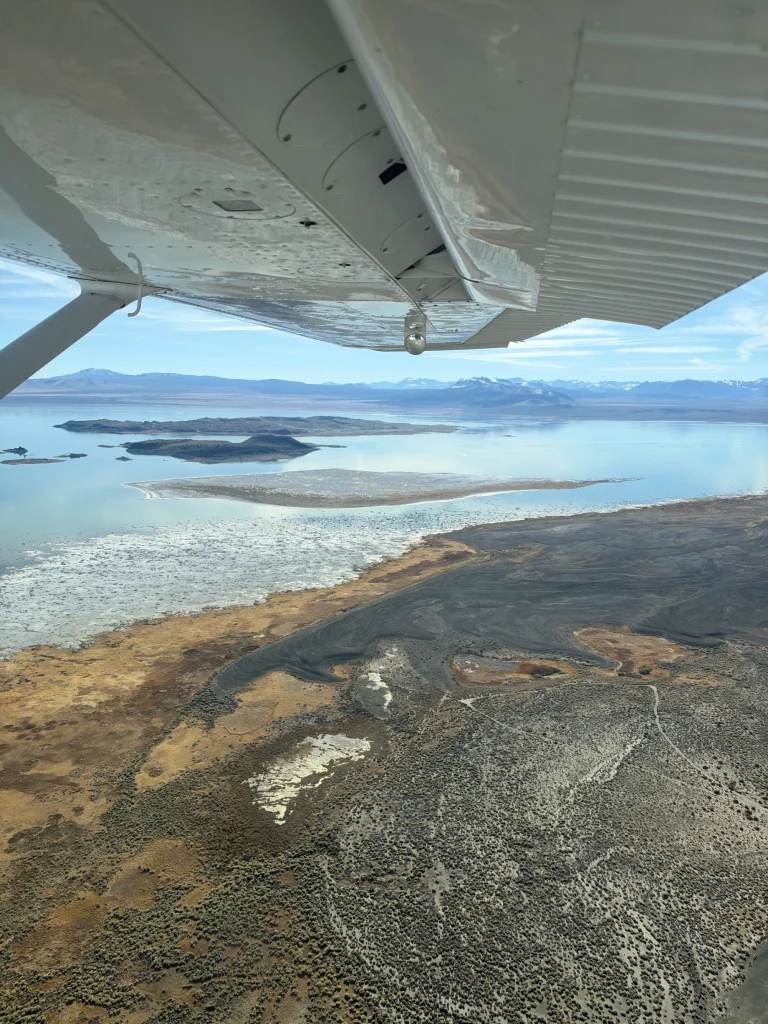
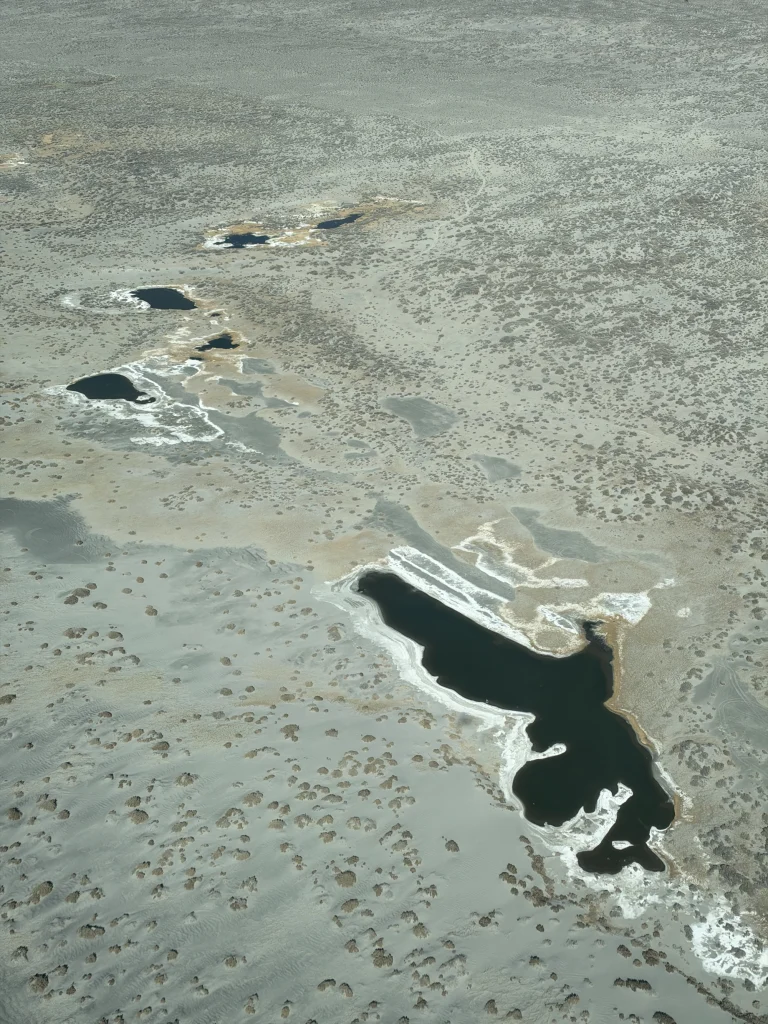
For years, researchers timed the survey for mid-October, when they expected the most grebes to be on the lake. But the biggest gathering can come earlier or later. The survey schedule now calls for five flights spaced through the fall, and this year LightHawk flew surveys from August through November.
Past El Niño events have been linked to swings in grebe numbers at Mono Lake. With a strong El Niño underway and expected to persist into early 2027, this fall’s surveys give researchers a point of comparison for next fall’s counts.
For eared grebes, finding enough food at Mono Lake is part of getting ready for the rest of their migration. When fewer birds show up or flocks leave earlier than usual, researchers can look back at more than two decades of counts to see whether it’s a one-year fluctuation or part of a longer shift in how the birds use the lake. Each fall LightHawk flies with the Mono Lake Committee, that record grows.